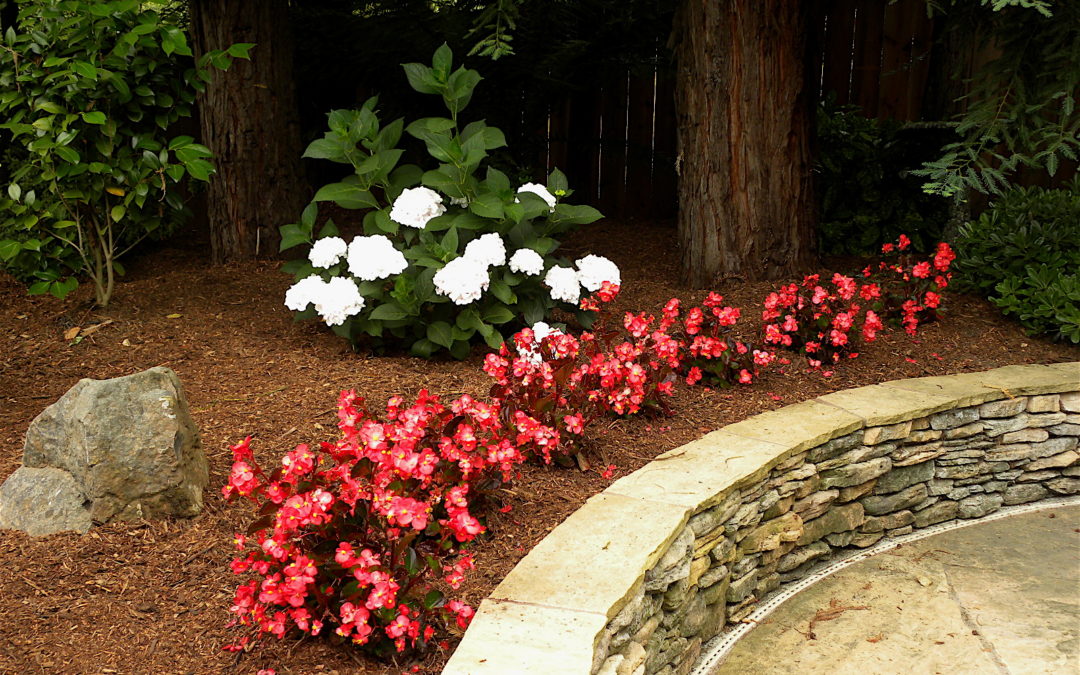
Fine gardens deserve a beautiful finishing touch. After the trees and plants have been installed, the drip irrigation is in place, and the low-voltage lighting has been completed, it is time to apply bark. While often overlooked, bark plays an important role in both the appearance and function of a landscape. Bark provides a neat finished look
At Details Landscape Art, we consider bark one of the final steps that transforms a construction project into a finished garden. It conceals irrigation tubing and lighting wire, creates a clean and uniform appearance, and helps reduce weed growth throughout the landscape.
Why Bark Matters
Most homeowners initially think of bark as a decorative covering for the soil. While it certainly improves the appearance of a garden, it serves several practical purposes as well.
A properly applied layer:
- Creates a finished, professional appearance
- Helps suppress weeds
- Reduces soil moisture evaporation
- Protects irrigation tubing and lighting wire
- Provides a clean backdrop that highlights plant material
The plants are usually the stars of the garden. Bark acts as the stage upon which those plants perform.
More Than Weed Control
One of the most common questions we receive concerns weed prevention.
Many contractors install landscape fabric or paper beneath the bark. Over the years, however, we have found these products to be less effective than many homeowners expect. Weeds eventually grow on top of the fabric anyway, and once the material tears or becomes disturbed, repairs can be frustrating and time-consuming.
Our preference is to use a quality pre-emergent herbicide in conjunction with bark. While no weed control method is perfect, we have found this approach to be both effective and economical over the long term.
Choosing the Right Bark
Over the years we have experimented with many different products.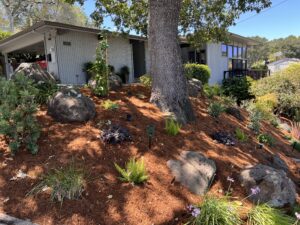 Shredded redwood bark on a hillside application
Some redwood products initially look attractive but weather rapidly, turning gray and eventually almost white, much like an aging redwood fence. We have found that certain fir products maintain their appearance longer and provide a cleaner overall look.
One of our favorites is Mini Fir. The smaller particles settle together nicely, resist being kicked around, and create a neat, uniform appearance throughout the garden.
We have also had good success with Black Mini Mulch. The dark color provides dramatic contrast against green foliage, colorful flowers, and natural stone. It creates a rich, finished appearance that many homeowners find appealing.
As with any landscape material, personal preference plays a role, and we help clients choose the product that best complements their garden design.
Why We Avoid Constant Reapplication
One mistake we occasionally see is the continual addition of more bark year after year.
At first glance this seems logical. As the surface weathers, simply add another layer.
The problem is that over time the bark becomes excessively deep. Drip irrigation tubing and lighting wire become buried, making future repairs or modifications difficult. Something as simple as adding an emitter to a plant can become a treasure hunt.
Instead, we recommend removing one inch of the weathered surface layer before applying a freshen inch layer. Since most oxidation occurs only on the exposed upper layer, this approach maintains the appearance of the garden without creating unnecessary depth.
Keeping the Garden Looking Fresh
Like every element of a landscape, bark benefits from occasional maintenance.
Deciduous trees drop leaves in autumn. During cleanup, some bark inevitably gets removed along with the leaves. Weather and foot traffic also gradually affect its appearance.
Refreshing the bark every few years helps maintain the crisp, finished look that homeowners appreciate. Done properly, the process is simple and economical.
The Finishing Touch
The difference between a garden that looks unfinished and one that looks complete is often found in the details.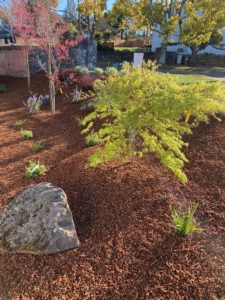 Mini fir bark provides the finishing touch
Bark may not be as exciting as a specimen tree, a water feature, or a flagstone patio, but it plays an important supporting role. It highlights the plants, suppresses weeds, conceals irrigation components, and brings the entire landscape together.
At Details Landscape Art, we believe the finishing touches matter. A quality layer of bark is one of the simplest ways to make a beautiful garden look complete.