

Demolition is one of the less glamorous yet essential elements of a landscaping project. Removal of the old landscape paves the way for a blank slate upon which a new garden can be built. Occasionally we are called in to landscape a completely bare dirt space with no preexisting landscaping. More often than not, however, demolition is required to prepare our new canvas and remove the existing yard.
At Details Landscape Art, we design and build landscapes throughout Sonoma, Marin, and Napa Counties. Proper demolition is often the first step toward creating a beautiful new garden.
Demolition Begins with Removing Existing Lawns
Existing lawns are usually among the first elements to be removed. We typically apply an appropriate herbicide to unwanted lawn areas before removal, being careful to protect any plant material that will remain.
Bermuda grass deserves special mention. It is an exceptionally tough and invasive plant with an extensive root system. If any living roots remain in the soil, Bermuda grass can quickly reinfest a newly installed landscape.
For this reason, we make certain that Bermuda grass is completely dead before removal. Once eradicated, a sod cutter is used to remove the lawn to a depth of a few inches.
Removing Unwanted Plants and Trees
Unwanted shrubs and plant material are removed roots and all. Larger trees may require the services of a professional tree company to remove the tree and grind the stump.
Some projects also require heavy equipment for moving large boulders or excavating difficult areas.
Removing old material allows the new landscape design to begin with a clean slate.
Concrete and Fence Removal
Old patios, walkways, and other unwanted concrete surfaces are often jackhammered out and hauled away. Existing gravel, stone, and hardscape materials may also be removed if they are not part of the new design.
When replacing fences, we remove the old fencing and posts whenever practical. In some situations, existing concrete footings can remain buried if new posts are installed nearby.
Every project presents unique challenges, and demolition methods vary accordingly.
Demolition Generates Debris
Landscape demolition generates considerable amounts of debris.
Depending on local regulations and project size, homeowners may rent debris boxes, hire hauling services, or use a combination of disposal methods. Rules regarding green waste, concrete, soil, and mixed debris often vary by municipality.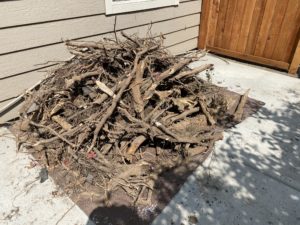 Debris from demolition
Whenever possible, materials are recycled or disposed of responsibly.
Demolition Requires Dust Control and Safety
Demolition can be dusty, noisy, and messy. We always prepare homeowners for the temporary inconvenience that accompanies the removal process.
When necessary, we protect nearby structures with plastic sheeting and take measures to minimize dust. During the dry season, lightly wetting the soil can help reduce airborne dust and make excavation easier.
Safety is always a top priority. Demolition involves power tools, heavy materials, and equipment, requiring careful attention to both worker and homeowner safety.
Preparing for a New Garden
Although demolition may not be the most exciting phase of a landscape project, it is one of the most important. A properly prepared site provides the foundation for successful grading, drainage, hardscape installation, irrigation, and planting.
Sometimes creating a beautiful new garden begins with tearing out the old one.