
Where do landscaping tips come from? Over the years, every landscape contractor develops a collection of favorite tricks, techniques, and lessons learned. Some come from experience. Some come from solving problems. Others come from discovering a better way to do something.
Since 1991, Details Landscape Art has been designing and building landscapes throughout Sonoma County and the North Bay. Along the way, we’ve accumulated plenty of practical tips that help create healthier plants, stronger structures, and more successful gardens.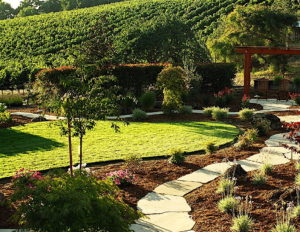 Landscaping tips can lead to beautiful gardens
Here are some of our favorites.
Tips for Healthier Lawns
One of our favorite tips is to fertilize lawns during the winter months.
Many people assume lawns are dormant and not actively using nutrients during the cooler season. However, we have repeatedly observed that lawns receiving winter fertilization remain greener, denser, and more resistant to weeds than lawns that are neglected during winter.
When spring arrives, these lawns often respond with vigorous growth and improved color.
Landscaping Tips for Vegetable Gardens
When building raised vegetable beds, we recommend installing a plastic liner along the inside walls of redwood planting boxes.
Vegetable gardens require frequent irrigation, and constant moisture can eventually shorten the life of untreated redwood. A plastic barrier helps protect the wood while extending the lifespan of the planter.
This simple step can add years to the life of a raised planting bed.
Tips for Better Lawn Edges
Clean lawn edges make a tremendous difference in the appearance of a landscape.
Many homeowners hold string trimmers horizontally. We recommend turning the trimmer vertically and cutting a crisp edge where the lawn meets the walkway, driveway, or planting bed.
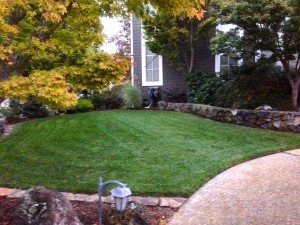 Landscaping tips – edge lawns vertically
Avoid creating deep trenches between the lawn and hardscape. A clean vertical edge produces a neat, professional appearance.
Landscaping Tips for Redwood Structures
Redwood fences, arbors, and decks naturally weather to a gray color over time.
Some homeowners appreciate this aged appearance, while others prefer the original warm redwood tones.
We’ve had excellent results using cleaning products designed to remove surface oxidation from weathered redwood. With proper cleaning, much of the original color can often be restored without replacing the wood.
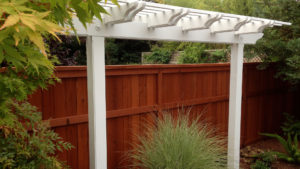 Landscaping tips – treat redwood with Mold Armor
Landscaping Tips for Hillside Irrigation
Watering slopes requires a different approach than watering level ground.
If too much water is applied at once, it tends to run downhill before it can soak into the soil.
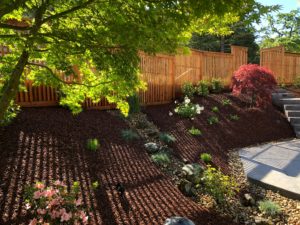 Landscaping tips – slow infrequent hillside irrigation
One of our favorite tips for hillside gardens is to water more frequently but for shorter periods. For example, two ten-minute cycles often produce better results than one twenty-minute cycle.
Many irrigation controllers allow multiple start times, making this strategy easy to implement.
Landscaping Tips for Hydrangeas
Homeowners often ask how to produce blue hydrangea flowers.
The answer lies in soil chemistry. Applying aluminum sulfate before flower buds develop can encourage blue blooms on many hydrangea varieties.
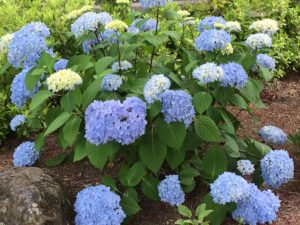 Aluminum sulfate leads to blue hydrangeas
Keep in mind that not every hydrangea variety responds the same way, but many blue-flowering selections benefit from this treatment.
Landscaping Tips for Stone and Masonry Projects
Construction materials continue to evolve.
Over the years we have seen significant improvements in mortars and bonding products used for flagstone and masonry installations. Modern polymer-modified mortars often provide superior adhesion and durability compared to older materials.
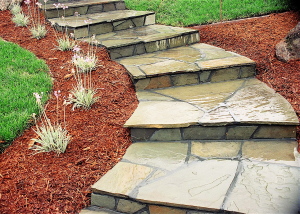 Landscaping tip – use Polymer modified mortar for masonry
Using the correct product helps ensure a longer-lasting installation.
Landscaping Tips for Plant Selection
One of the most important tips we can offer is simple:
Know how large a plant will become before planting it.
Many landscapes become overcrowded because plants were selected based on their appearance at the nursery rather than their mature size.
A newly planted garden may appear slightly sparse at first, but proper spacing allows plants to mature naturally without constant pruning or removal.
The goal is to have plants eventually touch one another while still maintaining their individual character.
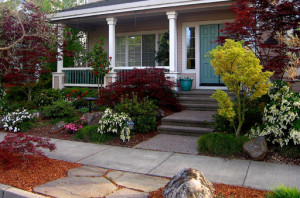 Landscaping tips – plant spacing is important
Landscaping Tips for Stronger Construction
When building fences, arbors, retaining walls, and other wood structures, we strongly prefer screws over nails.
Wood naturally expands and contracts as temperatures and moisture levels change. Screws generally provide stronger long-term fastening and are far less likely to loosen over time.
This small detail often contributes significantly to the longevity of landscape structures.
Small Details Make a Big Difference
Many successful gardens are the result of dozens of small decisions made correctly over time.
Proper soil preparation, thoughtful plant selection, efficient irrigation, quality construction techniques, and ongoing maintenance all contribute to long-term success.
At Details Landscape Art, we have learned that the little things matter. These landscaping tips may seem simple, but together they help create healthier plants, stronger structures, and more beautiful gardens throughout Sonoma County.