
Lawns have long been a staple of residential landscaping, but in an era of drought concerns and water conservation, many California homeowners have developed a love-hate relationship with them. Styles have changed, priorities have evolved, and homeowners are rethinking how much lawn area they truly need.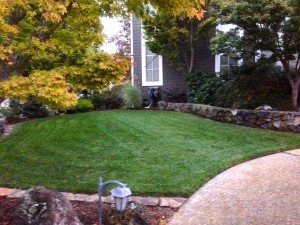 Lawns can be lush and beautiful
At Details Landscape Art, we have been installing lawns throughout Sonoma, Marin, and Napa Counties since 1991. In recent years, however, we have often encouraged homeowners to consider reducing lawn areas and exploring alternative landscape solutions. We like to say:
Less grass means less water, means less maintenance, means less expense. Less is more!
When Lawns Make Sense
Despite the trend toward drought-tolerant landscaping, there are still situations where lawns are entirely appropriate.
Families with young children often appreciate a lawn area for play. Some homeowners enjoy having an open area for pets, outdoor games, or informal gatherings. On larger properties, a lawn can also provide visual relief and contrast within a more extensive landscape design.
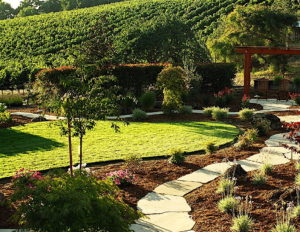 Larger lawns for larger gardens
The key is to install lawn where it serves a purpose, rather than simply making it the default landscape choice.
Designing Lawns for Efficiency
A successful lawn requires more than simply laying sod.
Proper soil preparation, irrigation design, and edging all contribute to the long-term health and appearance of the turf. We recommend that every lawn be designed with efficiency in mind so that water is applied where it is needed and maintenance is minimized.
Smaller, well-defined lawn areas are often easier to maintain and fit more naturally into today’s landscape designs.
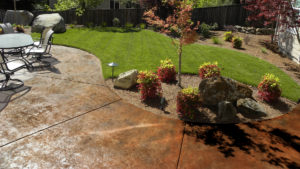 Smaller lawns for smaller gardens
Lawn Irrigation Requirements
A healthy lawn depends on proper irrigation.
We install underground sprinkler systems designed to provide head-to-head coverage. Because sprinkler heads do not adequately water the area immediately around themselves, each head should spray far enough to reach the next head. This overlapping pattern helps ensure uniform coverage throughout the lawn.
A properly designed irrigation system helps prevent dry spots, reduces wasted water, and promotes healthier turf.
Lawn Edging Creates a Cleaner Landscape
We also recommend edging every lawn area.
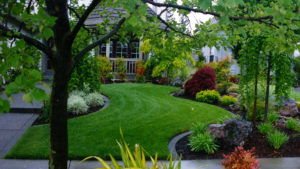 Lawns look neater with mow strips or edging
Without edging, grass gradually creeps into adjacent planting beds, bark, and groundcover areas. Over time, this creates a messy appearance and increases maintenance requirements.
Depending on the design, lawn edging may consist of:
- Concrete mowstrips
- Flagstone mowstrips
- Synthetic benderboard
- Steel headers
Well-defined edges create a cleaner, more finished appearance and make mowing easier.
Selecting the Right Grass
Grass varieties have improved significantly over the years.
Details Landscape Art has long worked with Delta Bluegrass and has had excellent results with their Bolero and Bolero Plus blends. These dwarf turf varieties grow more slowly than traditional lawns, reducing both mowing frequency and water consumption.
They perform well in Northern California conditions, tolerate partial shade, and maintain an attractive appearance throughout much of the year.
Fertilizing Lawns for Long-Term Health
Lawns benefit from regular fertilization.
We generally recommend a balanced lawn fertilizer during the growing season, supplemented with iron products to encourage rich green color and healthy growth. During fall and early winter, a cool-season fertilizer can help strengthen the root system and prepare the lawn for spring growth.
A consistent fertilization schedule helps maintain a lawn that is thick, vigorous, and attractive.
(Internal Link: Fertilizing Lawn and Garden)
A Balanced Approach to Lawn Design
While many homeowners are reducing lawn areas in favor of drought-tolerant plantings and outdoor living spaces, lawns still have a place in landscape design when used thoughtfully.
The goal is not necessarily to eliminate lawns altogether, but to use them where they provide real value and enjoyment. A properly designed lawn, supported by efficient irrigation and good maintenance practices, can remain an attractive and functional part of a Sonoma County landscape.