
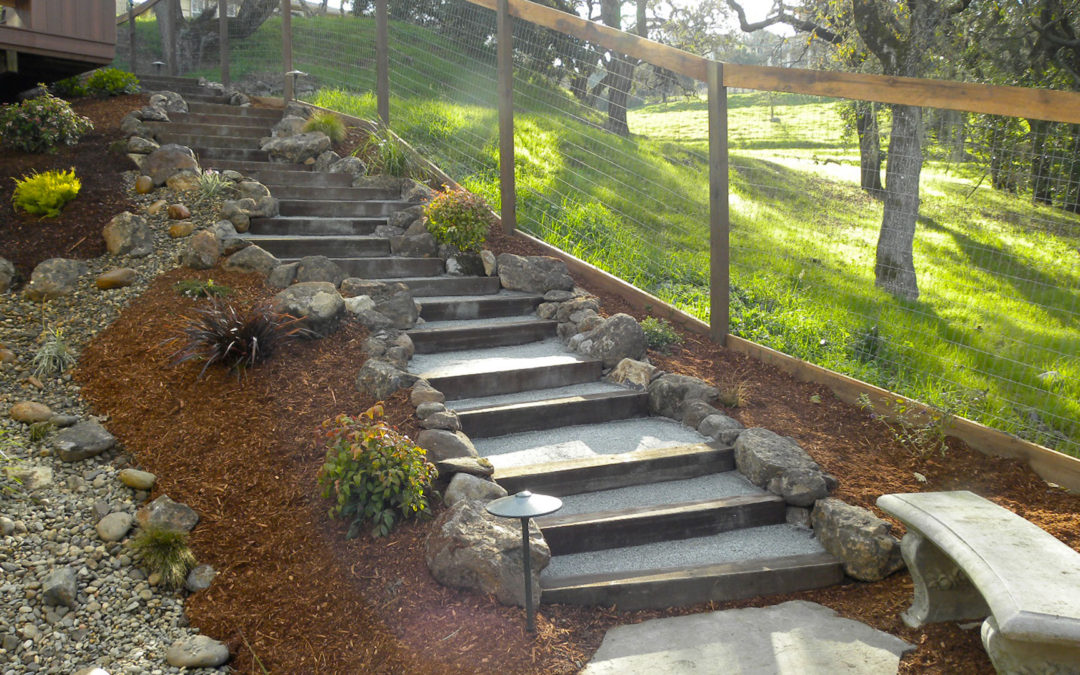
Pressure-treated steps are one of the most practical and economical ways to navigate slopes in a landscape. At Details Landscape Art, we design and build gardens throughout Sonoma County, where hillside properties are common and changes in elevation often require creative solutions. Pressure-treated steps on a hillside
From gentle slopes to steep hillsides, pressure-treated timber steps provide an attractive and informal way to move safely from one level of the garden to another.
Landscaping on Slopes
The North Bay is a hilly region, and many homes are built on sloping lots. In some cases, the landscape can be reshaped through excavation and grading, creating level areas supported by retaining walls.
In other situations, steps are the more practical solution.
When a project includes patios, walkways, driveways, or other hardscape features constructed from flagstone, brick, stamped concrete, or exposed aggregate, we often recommend using those same materials for the stairs. Consistency is an important design principle. In our humble opinion, mixing too many different hardscape materials can create a busy appearance.
However, there are situations where pressure-treated steps are the perfect choice.
Building Pressure-Treated Steps
Our pressure-treated steps are typically constructed using 6×6 timbers.
The timbers are cut to length, usually between three and four feet, and secured with sixteen-inch rebar spikes driven through pre-drilled holes deep into the ground. The slope is carefully excavated beforehand and each timber is installed level and plumb.
The spacing between steps is determined by the steepness of the hillside and the overall length of the staircase. Steeper slopes require closer spacing, while gentler grades allow wider treads.
The riser height is always six inches, matching the height of the timber. This creates a comfortable and predictable step pattern.
Designing Comfortable Stairways
Good steps should feel natural and comfortable to climb.
On long stairways, we often incorporate one or more landings. These flat resting areas provide visual interest and give people a place to pause while ascending or descending the hill.
For elderly homeowners or situations involving particularly steep slopes, railings may be appropriate. While Details Landscape Art does not install wrought iron railings, we work with excellent local craftsmen who specialize in that type of work.
Safety should always be part of the design process.
Materials Between the Pressure-Treated Steps
One advantage of pressure-treated steps is their flexibility.
The tread area between the timbers can be filled with a variety of materials, including:
- Decomposed granite
- Gravel
- Decorative stone
- Creeping groundcovers
The choice depends on the style of the garden and the preferences of the homeowner.
Groundcovers can soften the appearance and help the steps blend naturally into the landscape. Decomposed granite creates a clean and durable walking surface. Gravel provides a rustic, informal look.
An Informal and Natural Appearance
One of the reasons we like pressure-treated steps is their ability to fit naturally into a hillside garden.
The stairs can run straight down a slope, gently curve, or meander through the landscape. We often build informal dry-stack stone walls alongside the steps and soften the edges with plantings.
The result feels less formal than concrete or masonry stairs and often works beautifully in naturalistic and country-style landscapes.
Durable and Economical
Pressure-treated lumber is specifically designed to resist decay, insects, and soil contact.
Although the timbers are installed directly into the ground, they typically provide many years of service with minimal maintenance. They also cost significantly less than many masonry stair systems, making them an attractive option for larger hillside projects.
At Details Landscape Art, we use pressure-treated steps when the site, budget, and style of the landscape call for a practical and attractive hillside solution. Properly installed, they provide safe access, blend naturally into the garden, and can remain beautiful for many years.