

Root Removal: A Necessary Evil
Root removal is one of the least glamorous aspects of landscape construction, yet it can be one of the most important. Hidden beneath the soil surface, old tree roots can create significant challenges during a landscape renovation if they are not properly addressed before construction begins.
In the spring of 2020, Details Landscape Art was hired to design and build a complete backyard renovation in North Bennett Valley during the height of the Coronavirus pandemic. After several consultations with the homeowners regarding both project scope and safety procedures, we agreed on a complete landscape remodel.
The project included demolition of existing concrete, lawn, irrigation systems, fencing, and plant material. New patios, steps, seat walls, fencing, lighting, irrigation, lawn, and plantings would be installed as part of the finished garden.
Why Root Removal Matters Before Construction
The rear property line backed up to a busy street and was separated by a fence owned by the homeowners association. Along that fence stood approximately a dozen mature trees and large hedges, many with aggressive root systems extending well into the yard.
The homeowners agreed to hire an arborist to remove the trees and hedges before construction began.
During our planning discussions, we specifically recommended that the arborist not only remove the trees and grind the stumps, but also perform thorough root removal. Mature tree roots can extend surprisingly long distances underground and often remain intact long after a tree has been removed.
To facilitate access, we divided the project into two phases. First came demolition. Then, after the tree work was completed, we would return for construction of the new landscape.
An Unexpected Root Removal Problem
When we returned several weeks later, the trees and hedges had been removed and the stumps had been ground.
Unfortunately, the lateral roots remained.
At first glance only a few surface roots were visible, but as experienced contractors we knew the real issue was what remained underground. There was no practical way to estimate how many roots were still present, how large they were, or how far they extended.
We informed the homeowners that root removal beyond what had already been completed would require additional labor and expense.
Construction moved forward while we removed smaller roots as they were encountered and tracked the additional time involved.
Large Roots Create Construction Delays
The real challenge appeared when we began excavating planting areas for new trees.
We soon encountered roots measuring up to six inches in diameter. These were far beyond what could reasonably be handled during normal planting operations.
As landscape contractors rather than arborists, we recognized that specialized equipment would be required. We recommended that the homeowners contact the arborist and request completion of the root removal work that should have been addressed originally.
Unfortunately, the issue was not resolved.
Despite the fact that root removal had been specifically excluded from our contract, the homeowners understandably wanted the problem solved so construction could continue.
Solving the Root Removal Issue
After receiving approval from the homeowners association, a section of the rear fence was temporarily removed to allow access for heavy equipment.
We then arranged for a large excavator and experienced operator to remove the remaining root system. The work was completed at the homeowners’ expense, but only after considerable delays and additional costs.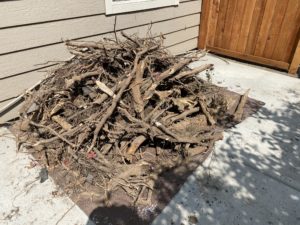 Root removal was an unexpected expense
The frustrating part was that the work could have been completed much more efficiently when the trees were originally removed.
Root removal is especially important beneath future patios, retaining walls, walkways, lawns, and irrigation systems. Leaving large roots in place can interfere with excavation, create settlement problems, and complicate future planting, making proper site preparation an important part of any successful landscape renovation.
The Lesson Learned
This project serves as an important reminder for homeowners undertaking major landscape renovations.
When mature trees are removed, stump grinding alone may not be sufficient. If future patios, lawns, irrigation systems, planting beds, or fences are planned for the same area, complete root removal should be considered as part of the original tree removal process.
Doing the work once is almost always less expensive than returning later with specialized equipment after construction has already begun.
Root removal may not be exciting, but addressing it early can prevent delays, reduce costs, and help ensure a smoother landscape construction project from start to finish.