

In many of our blogs we talk about color—color in the foliage, color in the flowers, color in autumn, and the importance of contrast. The most basic of all colors, and Mother Nature’s natural color, is green. The various shades of green leaves, along with the deep reds and golds, offer the interest that makes our gardens exciting.
One of our specialties at Details Landscape Art is choosing plants with an eye toward mixing heights, textures, bloom seasons, and providing just the right mix of color and soft backgrounds. Since most of the plants we use have green foliage, it is important to distinguish the various shades of green and their relative value with other colors and textures in the garden.
Although there are dozens upon dozens of different shades of green, for simplicity we will categorize them into four groups: bright green, gray green, silver green, and dark green. Following is an incomplete list of plants we regularly use in each category. Keep in mind there are literally hundreds of plants available, including trees, shrubs, perennials, and ground covers, but these are our favorites.
Bright Green
- Euonymus microphylla – probably the brightest green of all, with small white flowers.
- Euonymus ‘Green Spires’ – a taller, narrow upright shrub.
- Lomandra ‘Breeze’ – a smaller 2′ x 4′ evergreen grass that adds a fresh bright grassy texture to the garden; one of our favorites.
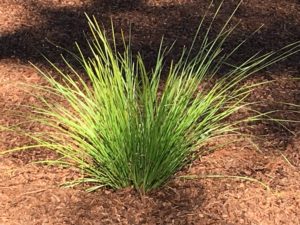 Lomandra ‘Breeze’ is a bright shade of green
 - Trachelospermum – star jasmine is a great spreading ground cover or vine that thrives in sun or shade.
- Choisya ternata – Mexican mock orange is a large shade-loving evergreen shrub with very fragrant spring blooms.
- Acer palmatum ‘Viridis’ – a low-growing mounding Japanese maple.
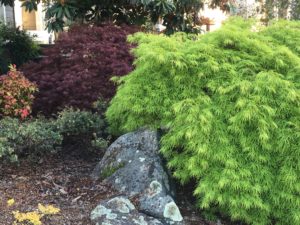 Acer ‘Viridis’ shows a lime shade of green
Shades of Green – Gray Green
- Westringia rosmariniformis – a large 7′ x 7′ shrub with soft gray-green evergreen foliage and an abundance of small white flowers nearly year-round.
- Lavandula provence – like all lavenders, the gray-green foliage contrasts beautifully with the purple flowers. A somewhat high-maintenance plant that benefits from deadheading several times each year.
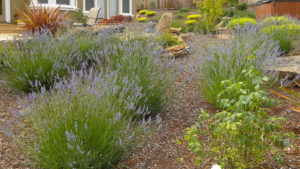 Lavender ‘Provence’ shows a grayer shade of green
 - Rosmarinus – all forms of rosemary are tough, hardy, evergreen, and offer various shades of blue flowers.
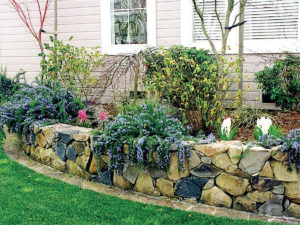 Rosemary also has a grayish shade of green foliage
Silver Green
This category includes variegated foliage.
- Tulbaghia ‘Silver Lace’ – variegated society garlic is a small evergreen perennial with purple flowers.
- Hydrangea macrophylla variegata – best in morning sun and afternoon shade.
- Variegated hostas – deciduous perennials that brighten a deep shade garden.
- Stachys byzantina ‘Silver Carpet’ – lamb’s ear is evergreen in milder climates.
Shades of Green – Dark Green
- Ceanothus – various California wild lilacs have dark glossy leaves and beautiful blue flowers.
- Sarcococca ruscifolia – our favorite deep shade plant, with glossy dark green leaves, fragrant winter flowers, and red berries.
- Arctostaphylos ‘Emerald Carpet’ – manzanita is a useful low-growing evergreen ground cover.
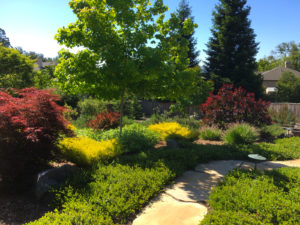 Manzanita ‘Emerald Carpet’ shows a darker shade of green
 - Azaleas – morning sun, afternoon shade, with dozens of varieties and flower colors.
- Ophiopogon japonicus – mondo grass is a low clumping evergreen that gradually spreads into a shade-loving ground cover.
Using Green in the Garden
Contrast the gray greens and silver greens with deep reds and burgundy foliage. Contrast the brighter greens with darker greens and white roses. The result is a garden that feels vibrant, interesting, and exciting year-round.
Flowers may come and go with the seasons, but foliage is always present. Thoughtful use of shades of green provides structure, texture, and beauty in every season of the year.