
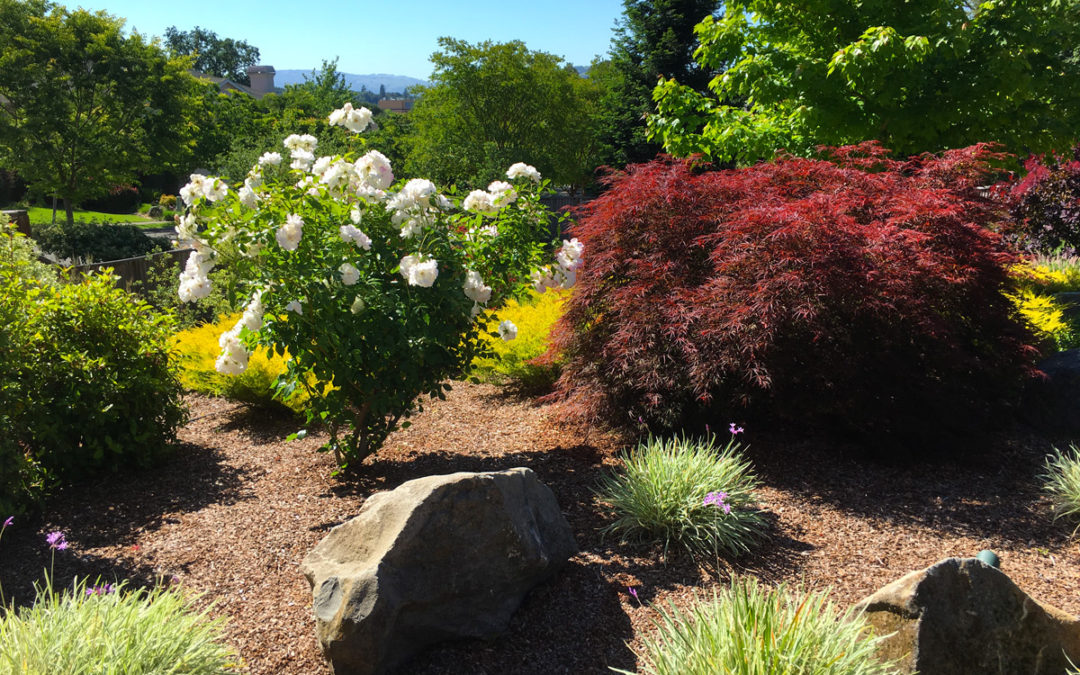
Shades of silver and gray are an important part of the plant palette we use at Details Landscape Art. Throughout Sonoma and Napa Counties, we design gardens that rely not only on flowers for color, but also on the foliage itself. Silver, gray, and variegated plants provide contrast, soften stronger colors, and help create attractive plant combinations throughout the year. Shades of silver and gray in the foreground provide contrast
In previous blogs, we have discussed the importance of color and contrast in the garden. Deep reds occupy the darker end of the color spectrum, while greens provide the backbone of most landscapes. Shades of silver and gray occupy the lighter end of the palette and help tie everything together.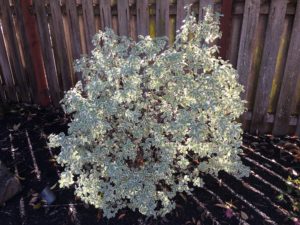 Shades of silver and gray
As with all successful garden design, it is not so much the individual plants that matter, but rather how they are combined. Our goal is always to create interest through a thoughtful mix of heights, textures, foliage colors, and bloom seasons.
Why Shades of Silver and Gray Are Important
Silver and gray foliage performs several valuable functions in the landscape.
These lighter colors help:
- Brighten planting combinations
- Create contrast with darker foliage
- Soften bold colors
- Add texture and visual interest
- Provide year-round beauty even when plants are not flowering
Many silver and gray plants also happen to be drought tolerant and deer resistant, making them particularly useful in Sonoma County gardens.
Plant Selection Comes First
Before selecting any plant, we first consider several important factors.
Are deer present?
Is the area sunny or shaded?
Does the homeowner prefer an Asian, Mediterranean, cottage, or more contemporary garden style?
Will the plants complement one another in terms of height, texture, mature size, and bloom season?
Only after answering these questions do we begin developing plant combinations.
Our Favorite Shades of Silver and Gray Plants
Tulbaghia ‘Silver Lace’
The variegated form of society garlic is one of our favorite companion plants. Its silver-striped foliage provides year-round interest, while lavender-purple flowers bloom throughout much of the summer.
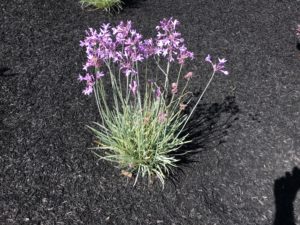 Tulbaghia ‘Silver Lace’
Shades Of Silver and Gray – Cerastium tomentosum
Commonly called Snow-in-Summer, this low-growing perennial spreads quickly and cascades beautifully over walls and slopes. The small white flowers stand out against the soft gray foliage.
Stachys byzantina
Lamb’s Ear is well known for its fuzzy silver leaves. It is drought tolerant, deer resistant, and provides a striking contrast to darker green foliage.
Artemisia
Several varieties of Artemisia perform well in North Bay gardens. We frequently use ‘Powis Castle’ for its fine texture, silver foliage, and drought tolerance.
Feijoa sellowiana
Pineapple guava is a large evergreen shrub with attractive gray-green foliage. The flowers and fruit are both edible, making this a useful and attractive screening plant.
Lavender
Lavender varieties range from silver to gray-green in color. Their fragrance, drought tolerance, and deer resistance make them ideal for Mediterranean-style landscapes.
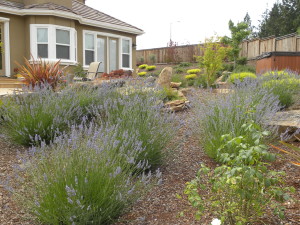 Lavender with shades of silver and gray
Festuca
Blue fescue is a compact ornamental grass with attractive silver-blue foliage. It pairs beautifully with deep red foliage plants and darker evergreen shrubs.
Effective Plant Combinations Using Shades Of Silver And Gray
One of the secrets to successful garden design is combining foliage colors effectively.
Silver and gray plants look wonderful when paired with deep reds, burgundy foliage, dark green evergreens, and even bright flowering perennials. Variegated plants can brighten shady corners, while silver foliage helps create a softer, cooler feeling during the heat of summer.
At Details Landscape Art, we rarely select plants based solely on their individual appearance. Instead, we focus on how plants work together to create beautiful, balanced landscapes.
Shades of Silver and Gray are an essential part of that process, bringing contrast, texture, and elegance to gardens throughout Sonoma and Napa Counties.