
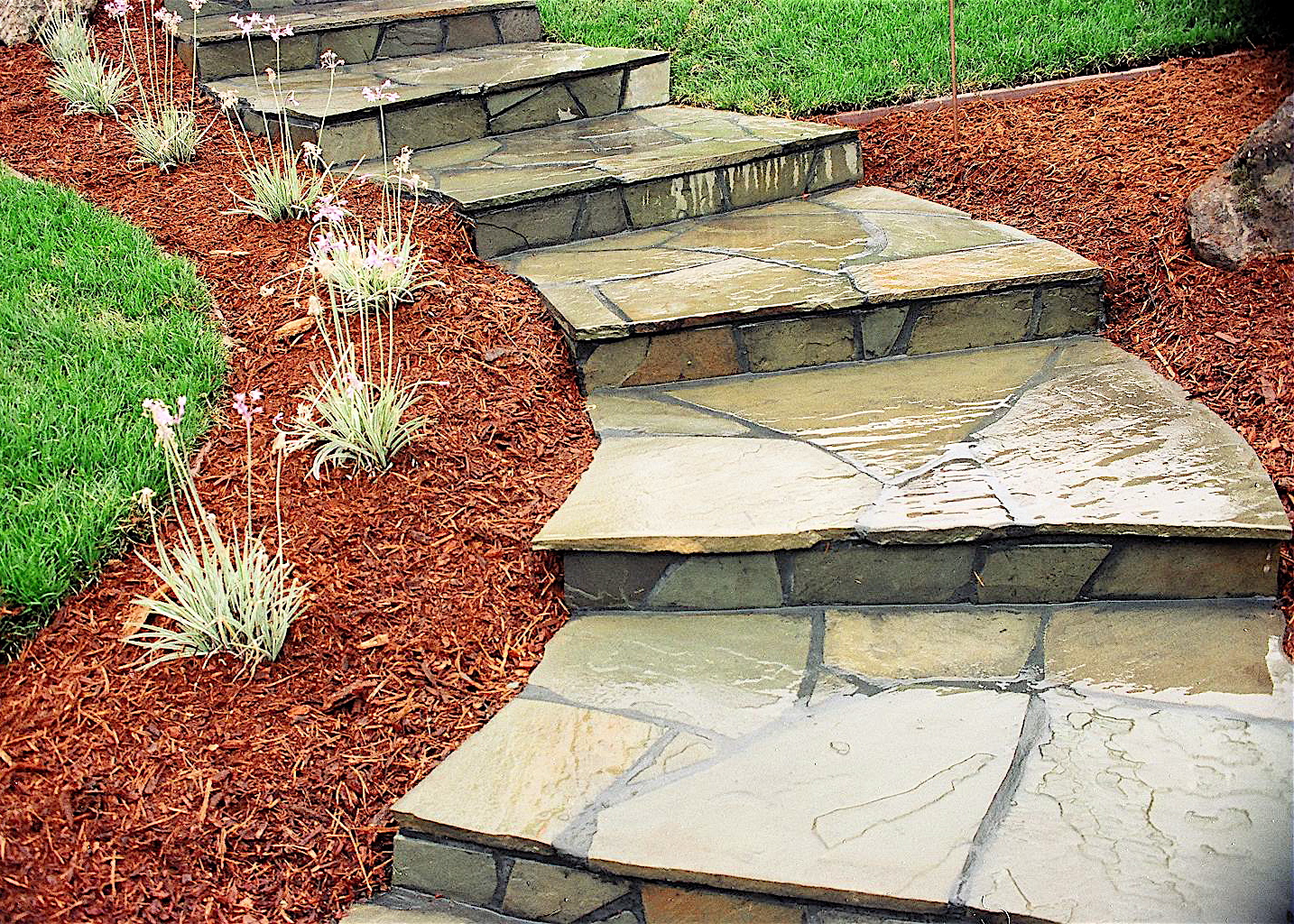
Many of the projects designed and built by Details Landscape Art involve changes in elevation. Some homes are built on gentle slopes, others on steep hillsides. Even relatively flat properties often have raised foundations, requiring visitors to move from one level to another. Flagstone entry steps
That’s where steps come in, and we believe they should be more than a utilitarian way to move up and down a slope. Properly designed, they can become beautiful landscape features that enhance the overall appearance of a garden while providing safe and comfortable access.
More Than a Way to Change Elevation
When we design a landscape, we try to coordinate all of the hardscape elements so they work together visually. Steps should complement nearby patios, walkways, driveways, and retaining walls rather than appear as an afterthought.
A well-designed set of stairs can frame an entrance, guide visitors through the landscape, and create an attractive transition between different areas of the garden.
In many cases, they become a focal point rather than simply a means of getting from one place to another.
Designing Comfortable Steps
There is both an art and a science to designing steps.
Most residential stairs are between five and seven-and-one-half inches high, with a tread depth of approximately twelve inches. The tread should not be perfectly level. A slight slope is required to allow water to drain away rather than puddle on the surface.
Occasionally we design extra-wide treads ranging from eighteen inches to two feet deep. These oversized landings can provide informal seating during outdoor gatherings and create a more relaxed, welcoming appearance.
Comfort, safety, and appearance must all work together.
Choosing Materials for Steps
One of our guiding design principles is simplicity.
We generally avoid mixing too many different hardscape materials in a single garden. When too many materials are used, the landscape can begin to look busy and disjointed. Coordinating materials throughout the project creates a more unified and attractive appearance.
They can be constructed from a variety of materials, including:
Flagstone Steps
Flagstone offers a timeless natural appearance and work beautifully with both traditional and contemporary landscapes. Connecticut Bluestone and Arizona flagstone are among our favorites.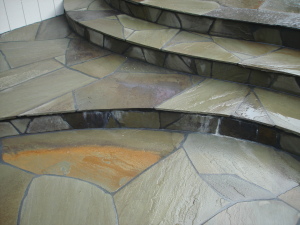 Connecticut bluestone steps
Stamped Concrete Steps
Stamped concrete can be coordinated with adjacent patios and walkways, creating a cohesive design while offering excellent durability.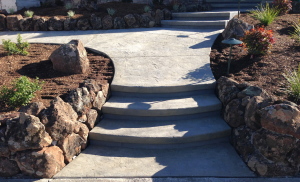 Stamped concrete steps
Exposed Aggregate
Exposed aggregate provides texture and visual interest and can be enhanced with contrasting brick or colored concrete edging.
Stacked Stone
Natural stone creates a rustic appearance that works particularly well in naturalistic landscapes and hillside gardens.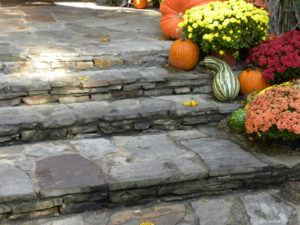 Shallow stacked-stone steps
Pressure-Treated Timbers
Pressure-treated 6×6 timbers can be used to construct attractive hillside stairs. Combined with decomposed granite and natural stone edging, they blend beautifully into informal garden settings.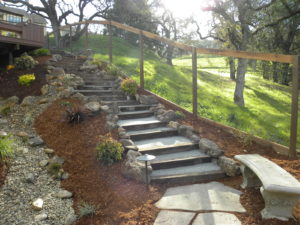 Pressure-treated steps with decomposed granite
Brick Steps
Brick remain a classic material choice and are available in a variety of colors, patterns, and styles.
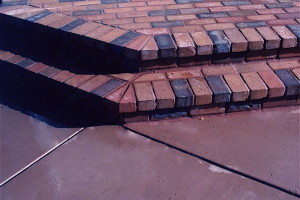 Brick steps
Matching Steps to the Landscape
The shape should relate to the surrounding hardscape.
A curvilinear patio may call for gently curved or semicircular stairs. A formal rectangular patio or driveway may be better served by squared-off steps with clean lines.
Sometimes a subtle curve is all that is needed to soften the appearance and create a more natural transition.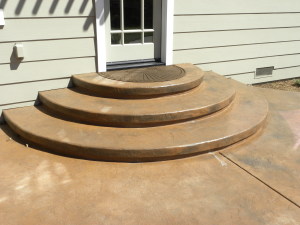 Half-moon semi-circular stamped concrete steps
The goal is to make them feel like an integral part of the landscape rather than a separate element.
Beauty and Function Combined
Good landscape design balances beauty and function.
Steps must safely move people from one elevation to another, but they can also contribute greatly to the character of a garden. The right materials, proportions, and layout transform a practical necessity into an attractive landscape feature.
At Details Landscape Art, we view stairs as an opportunity to enhance the garden rather than simply solve an elevation problem. Whether constructed of flagstone, concrete, brick, or timber, well-designed steps add both beauty and function to the landscape for years to come.