Landscape design begins long before the first shovel enters the ground. At Details Landscape Art, the process starts with a conversation. When we first meet with a homeowner, we listen carefully to their needs, wishes, budget, and ideas for the property. Every garden is different, and every homeowner has a unique vision of what they hope to achieve.
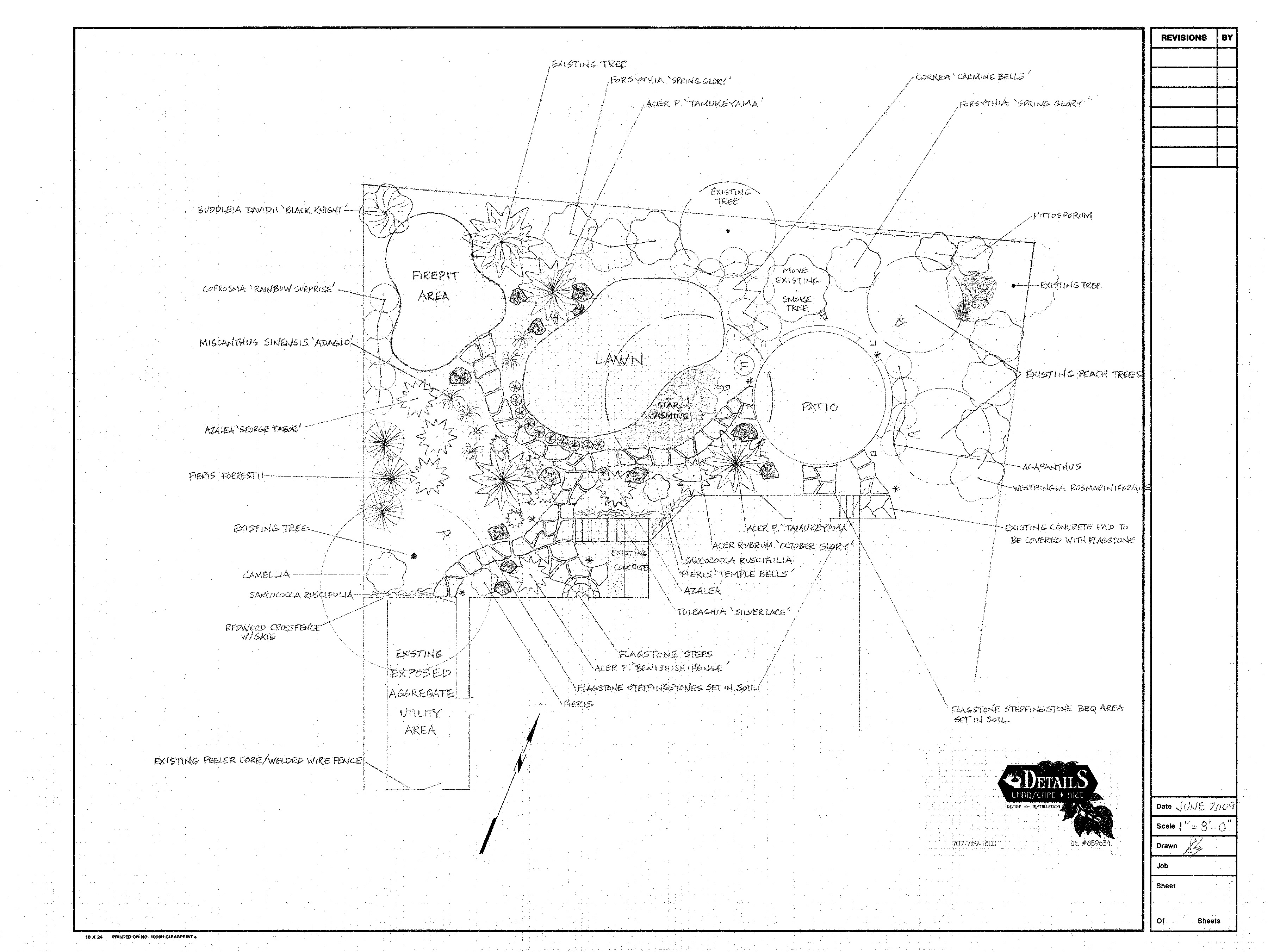
One of the first decisions we make together is whether the project requires a formal landscape design or sketch. Formal landscape design
Not Every Project Requires a Landscape Design
Many people are surprised to learn that not every landscape project requires a detailed plan.
If there are no large features that must be carefully measured and located—such as a patio, walkway, lawn area, or deck—we can sometimes proceed without a formal drawing. We can estimate quantities of soil, bark, boulders, trees, and plants, complete the demolition and preparation work, and then make planting decisions as the project unfolds.
In fact, some of our most beautiful gardens were created on the fly.
By spending time in the garden during demolition and site preparation, we gain a better understanding of the sun patterns, shade conditions, views, and overall feel of the space. Sometimes we don’t select the plants until we’re actually walking through the nursery, seeing what looks good and what is available at that particular time.
When a Landscape Design Is Needed
Other projects require a more structured approach.
Large properties, projects involving significant hardscape elements, or homeowners who prefer seeing ideas on paper before construction begins often benefit from a formal landscape design.
The first step is creating what we call a base map.
The base map shows:
- The house
- Property boundaries
- Existing trees to remain
- Driveways
- Walkways
- Outbuildings
- Other permanent features
Think of it as a blank canvas on which the new garden will be created.
Understanding the Homeowner’s Needs
Before drawing begins, we spend time learning about how the homeowner intends to use the space.
Important considerations include:
- Lifestyle
- Budget
- Privacy concerns
- Outdoor entertaining needs
- Children’s play areas
- Pet requirements
- Maintenance preferences
A successful landscape design must reflect the people who will live in and enjoy the garden.
Developing the Concept for a Landscape Design
Once the base map is complete, we begin sketching ideas.
Sometimes the first concept is exactly right. More often, several possibilities are explored before settling on a preferred direction.
The process is collaborative.
We may modify one sketch, combine elements from several concepts, or return to the drawing board entirely. The goal is not simply to create a beautiful garden, but to create the right garden for that particular homeowner.
Establishing a Realistic Budget
As the design develops, we prepare a preliminary estimate.
This is an important step because it allows the homeowner to determine whether the proposed design aligns with the available budget before significant time is invested in finalizing the details.
If adjustments are needed, they can be made early in the process.
By discussing costs throughout the design phase, there are fewer surprises later.
Refining the Details
Once the overall layout and budget are approved, we begin refining the design.
Materials are selected. Planting concepts are developed. Construction details are reviewed. The rough sketch gradually evolves into a complete landscape plan.
This stage is where the details begin to emerge—the details that ultimately give Details Landscape Art its name.
A Flexible Process Produces Better Gardens
No two landscape projects are exactly alike.
Some require detailed planning. Others evolve naturally as the work progresses. The key is remaining flexible while keeping the homeowner’s goals at the center of every decision.
At Details Landscape Art, the landscape design process is collaborative, creative, and practical. The result is a landscape that fits the property, the budget, and the people who will enjoy it for years to come.