Bird Habitat begins with understanding the four basic needs of birds: food, water, shelter, and nesting sites. At Details Landscape Art, we have designed and built custom landscapes throughout Sonoma and Napa Counties since 1991, and many of our clients enjoy creating gardens that attract birds and other wildlife.
While bird-friendly plants provide much of what birds need, additional garden features can make a landscape even more inviting. Bird feeders, birdbaths, and birdhouses all play important roles in creating a successful bird habitat.
Providing Food
One of the easiest ways to attract birds is by offering supplemental food.
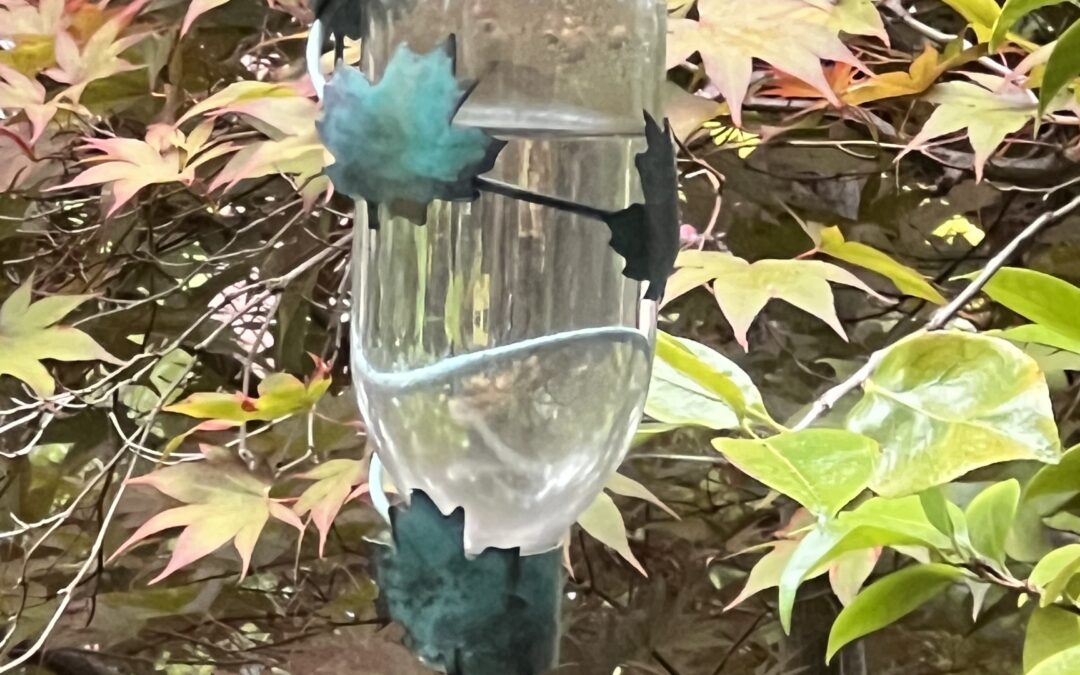
Bird feeders help support local bird populations and often attract species that may not otherwise visit the garden. Birds are naturally social creatures and quickly learn where reliable food sources can be found.  Hummingbird feeder in bird habitat
Different types of seed attract different birds.
Popular choices include:
- Sunflower seeds
- Hulled sunflower seeds
- Mixed bird seed
- Safflower seed
- Millet
- Cracked corn
- Thistle seed for finches
We recommend placing feeders where they can be enjoyed from inside the home, such as near a kitchen window, dining area, or patio. Feeders should also be located near trees or shrubs that provide birds with a safe retreat from predators. There are now bird feeders with built in cameras that can be linked to your cell phone, which notifies you when there is activity. You can see your birds all day long! Bird feeder with built in camera
Bird Habitat Requires Fresh Water
Water is every bit as important as food.
Birds require fresh water for both drinking and bathing. A simple birdbath can quickly become one of the most active features in the landscape.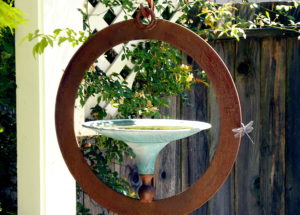 Birdbaths as part of the bird habitat
Birdbaths may be simple or decorative, but several design considerations are important:
- Provide shallow water for small birds
- Include deeper areas for larger birds
- Use stones to create varying water depths
- Refill regularly
- Clean periodically
Many birds enjoy splashing and bathing, adding movement and activity to the garden.
Whenever possible, place birdbaths in locations that are visible to the homeowner while remaining safe for the birds. Nearby trees and shrubs provide convenient resting places between visits to the water.
Bird Habitat Includes Shelter and Nesting Sites
Birdhouses provide birds with safe places to nest and raise young.
Many bird species nest naturally in tree cavities. As older trees disappear due to development and age, birdhouses help replace some of those lost nesting opportunities.
Bird species that frequently use birdhouses include:
- Wrens
- Bluebirds
- Chickadees
- Nuthatches
- Tree swallows
- Titmice
Wood remains the preferred construction material because it provides natural insulation and durability.
Birdhouses should be placed away from heavy foot traffic and mounted high enough to discourage predators while still allowing occasional cleaning and maintenance.
Designing Bird Habitat into the Landscape
The most successful bird gardens combine habitat features with appropriate plant material.
Trees, shrubs, perennials, and groundcovers provide natural food sources, shelter, and protection. Bird feeders,
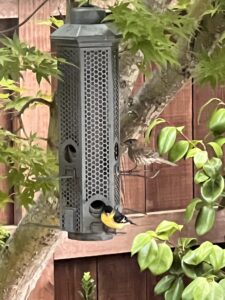 Bird feeder in bird habitat
birdbaths, and birdhouses supplement these resources and encourage birds to remain in the garden throughout the year.
Layered plantings are especially effective because they provide multiple levels of habitat and allow birds to move safely throughout the landscape.
Bird Habitat Throughout the Seasons
One of the benefits of creating bird habitat is that it provides year-round enjoyment.
Different bird species appear at different times of the year. Some remain year-round while others migrate through the area seasonally.
Maintaining feeders, keeping water available, and preserving sheltering plants helps ensure that birds continue to visit the garden regardless of season.
Even during winter, bird activity can bring color, movement, and life to the landscape.
Bringing the Garden to Life
A garden designed with birds in mind becomes more than a collection of plants. It becomes a living ecosystem filled with movement, sound, and seasonal interest.
By combining bird-friendly plants with feeders, birdbaths, and birdhouses, homeowners can create a welcoming bird habitat that benefits both wildlife and the people who enjoy the garden.
At Details Landscape Art, we believe that gardens should be beautiful, functional, and alive. Creating bird habitat is one of the most rewarding ways to bring nature closer to home.