
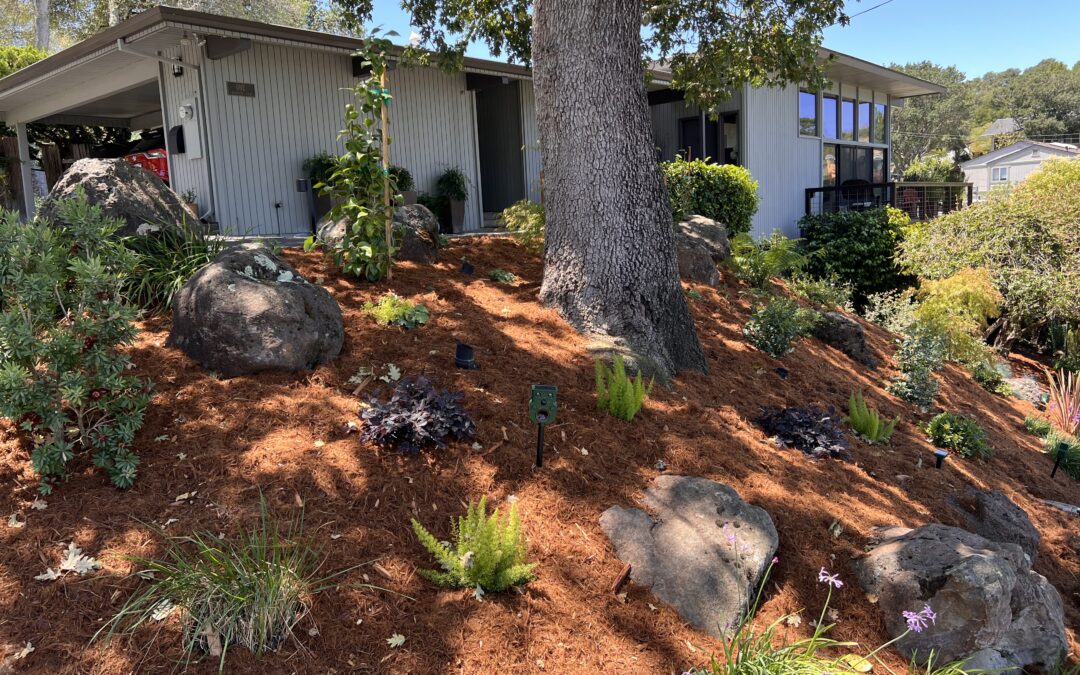
This garden transformation in Southwest Petaluma presented one of the more challenging projects Details Landscape Art has undertaken in recent years. The property combined a steep hillside, a heavy deer population, an active gopher population, and several large mature oak trees that cast dense shade over much of the landscape.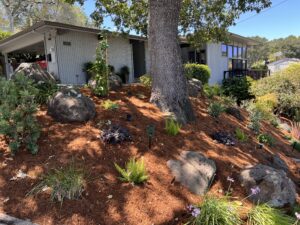 Garden transformation in northwest Petaluma
While every project presents unique obstacles, it is unusual to encounter so many challenges on a single property. Fortunately, solving landscape problems is one of the things we enjoy most.
Garden Transformation Begins in the Backyard
The project was completed in two stages, beginning with the backyard.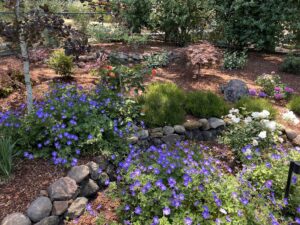
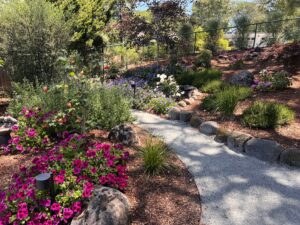
Shade tolerant perennials highlighted this backyard garden transformation
Because the backyard was fenced, deer were not a concern. This allowed us to use a much broader palette of shade-loving plants, including azaleas, hydrangeas,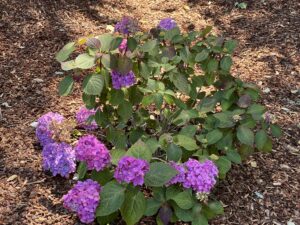 Hydrangea
and even a rose in an area that received a bit of afternoon sun.
Most of the existing plants and old bark were removed. We also discovered a small stone wall that had been assembled by simply piling rocks together. While technically a wall, it lacked both structure and visual appeal.
We dismantled the entire feature and rebuilt the eighteen-inch dry-stack wall properly before beginning the planting.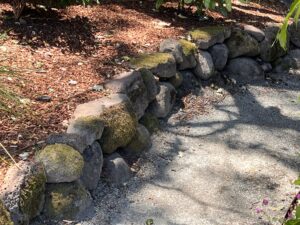 Dry-stack stone wall
Working Together on the Design
One of the enjoyable aspects of this project was working with a homeowner who genuinely loved plants and gardening.
She arrived with several ideas of her own. Some were excellent choices, while others required a little discussion. We explained why certain sun-loving plants would struggle beneath the mature oak canopy and why successful gardens depend on more than simply selecting individual plants.
A cohesive garden needs a theme. It is often less about the individual plants and more about plant combinations.
After exploring several possibilities, the homeowner embraced the idea of creating an Asian-style shade garden. As the project progressed, she became increasingly comfortable allowing us to guide the plant selection process. We also recommended preserving several existing plants and relocating others to more suitable locations.
The result is a spectacular backyard garden filled with texture, color, and seasonal interest.
Challenges of This Garden Transformation
The front yard presented an entirely different set of challenges.
The hillside approached a forty-five-degree angle in some locations, making demolition and planting difficult. Crew members spent much of their day slipping and sliding while navigating the steep slope. Finished hillside of this garden transformation
Many of the existing plants had originally been selected for sunny conditions and were performing poorly beneath the dense oak canopy. The oak roots themselves created another obstacle, competing aggressively for moisture and available planting space.
Every planting decision required careful thought.
Choosing the Right Plants for Garden Transformation
Plant selection became critical because we needed plants that could tolerate heavy shade, deer pressure, hillside conditions, and competition from mature oak roots.
Some of the plants selected included:
- Sarcococca ruscifolia
- Star jasmine
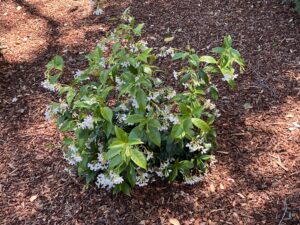
- Dicksonia antarctica (tree fern)
- Assorted ferns
- Loropetalum
- Lomandra ‘Breeze’
- Camellias
- Viridis Japanese maple
The goal was to create a lush evergreen landscape that would thrive under difficult growing conditions while maintaining an attractive appearance throughout the year.
Protecting New Plantings
Although there were few visible signs of gopher activity, we strongly recommended installing gopher baskets around every new plant.
The homeowners initially questioned whether the additional expense was necessary. We explained that the absence of gopher mounds did not necessarily indicate the absence of gophers. There simply had not been much desirable plant material for them to eat.
Fresh young roots are a different story.
The baskets provided inexpensive insurance against future plant losses.
We also recommended regular applications of Liquid Fence to discourage browsing deer. While many of the selected plants are considered deer resistant, there is an important distinction between deer resistant and deer proof.
Two months after planting, the deer have already sampled several plants. Unfortunately, hungry deer do not always follow the rules. If they are hungry enough, they will eat almost anything.
Irrigation and Mulch Matter
The existing drip irrigation system had reached the point where replacement made more sense than repair. Numerous unused emitters and holes remained from plants that had been removed over the years.
We installed a completely new drip irrigation system designed specifically for the new landscape.
Because of the steep slope, we selected shredded redwood mulch, commonly known as Gorilla Hair. Unlike the nuggets of mini-fir bark, which tends to roll downhill, Gorilla Hair interlocks and remains in place much better on steep hillsides.
A Landscape That Will Improve With Time
At the moment, the backyard is the star of the project.
The front hillside lacks some of the flowering color found in the fenced rear garden because deer pressure and heavy shade limited our plant choices. Even so, the hillside is already developing the lush evergreen appearance we envisioned.
As the plants mature and fill in, the entire landscape will become increasingly beautiful and cohesive.
This garden transformation demonstrates how thoughtful plant selection, creative problem solving, and experience can overcome difficult site conditions. What began as a challenging hillside property is already becoming one of the more distinctive gardens we have completed in Southwest Petaluma.