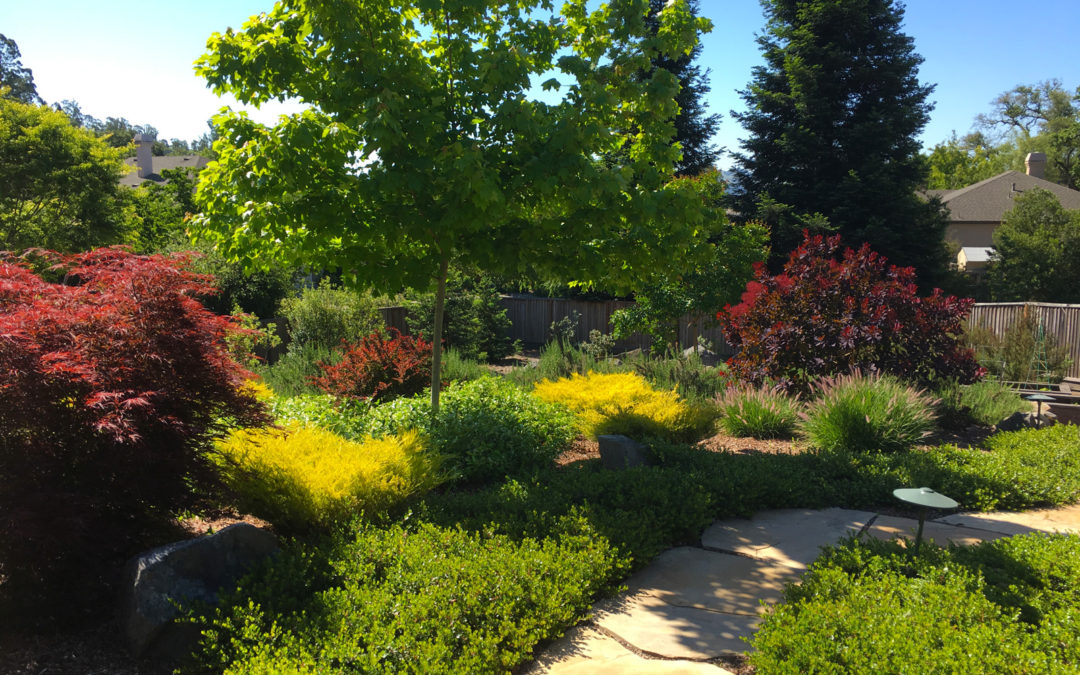
Native plants have become increasingly popular in California landscape design, and for good reason. They are well adapted to our Mediterranean climate, require less water once established, and provide valuable habitat for birds, butterflies, bees, and other wildlife.
At Details Landscape Art, however, we don’t believe every successful garden must be planted entirely with native species. Instead, we believe the best landscapes combine natives with carefully selected ornamental trees, shrubs, grasses, and perennials to create gardens that are beautiful, practical, and suited to each homeowner’s lifestyle.
 Native plants combined with ornamentals
Why Native Plants Make Sense
Because California they evolved in our local climate, many perform exceptionally well in Sonoma County gardens.
Their advantages include:
- Lower water requirements after establishment
- Reduced fertilizer needs
- Adaptation to local soils
- Support for pollinators and native wildlife
- Excellent drought tolerance
- Lower long-term maintenance
Popular California natives we frequently incorporate into our designs include:
- Manzanita
- Ceanothus (California lilac)
- Toyon
- Deer grass
- Yarrow
- California poppy
These plants add texture, seasonal color, and natural beauty while blending comfortably into Northern California landscapes.
Native Plants Are Part of the Solution
One common misconception is that a sustainable landscape should consist entirely of natives.
In our experience, that isn’t always the best approach.
Every property is different. Some clients want an Asian-inspired garden. Others prefer Mediterranean styling, colorful cottage gardens, or traditional landscapes with Japanese maples, camellias, roses, and ornamental grasses.
Rather than following a single formula, we select plants that fit the design goals of each project while taking advantage of native plants where they make the most sense.
The result is a landscape that is attractive, functional, water-conscious, and uniquely suited to the homeowner.
Native Plants and Water Conservation
Petaluma and Sonoma County experience long, dry summers, making water conservation an important consideration in every landscape.
Native plants can significantly reduce irrigation requirements once established, especially when combined with efficient drip irrigation, proper soil preparation, and mulch.
Water conservation is rarely accomplished by plant selection alone. Successful drought-tolerant landscapes combine thoughtful design, efficient irrigation, and appropriate plant choices.
Designing Native Landscapes That Look Refined
Some homeowners picture native gardens as informal or overgrown.
In reality, native plants can be incorporated into highly refined landscape designs.
We often combine native species with:
- Natural stone
- Decorative concrete
- Boulders
- Dry creek beds
- Ornamental grasses
- Low-voltage landscape lighting
- Carefully selected ornamental plants
The result is a landscape that feels both natural and professionally designed.
Good Design Always Comes First
Whether we are designing with natives, ornamental plants, or a combination of both, our goal remains the same:
Create a garden that is beautiful throughout the year, functions well for the homeowner, and continues improving as it matures.
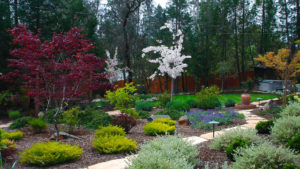 A tapestry of native plants in a Penngrove garden
Plant selection is only one part of successful landscape design. Sun exposure, drainage, irrigation, soil conditions, views, privacy, circulation, and outdoor living spaces all deserve equal consideration.
Native Plants in the Right Places
At Details Landscape Art, we believe native plants deserve an important place in Sonoma County gardens—but not because they are trendy.
We use them because they perform well, conserve water, support local wildlife, and often solve landscape challenges beautifully.
When thoughtfully combined with other well-adapted plants, native species become one element of a landscape that is attractive, sustainable, and uniquely tailored to each property.
A successful garden isn’t defined by whether every plant is native. It’s defined by thoughtful design, appropriate plant selection, and creating an outdoor environment that homeowners will enjoy for many years.