
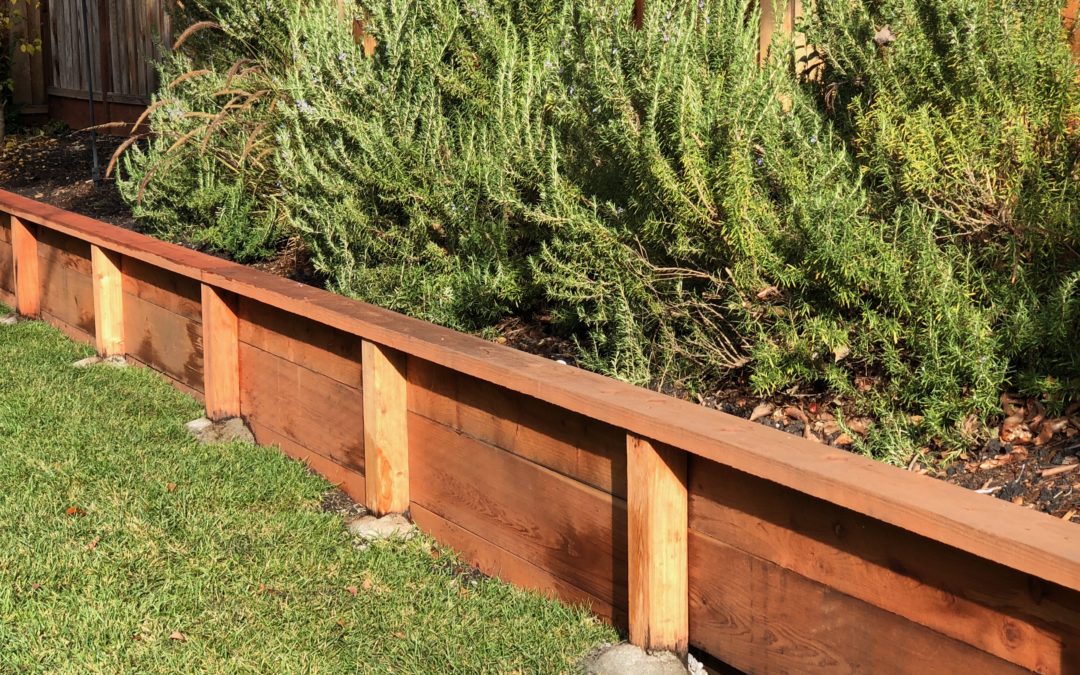
A redwood retaining wall is an attractive and functional solution for managing changes in grade within the landscape. At Details Landscape Art, we are frequently called upon to construct retaining walls that stabilize slopes, create level planting areas, and improve the usability of outdoor spaces. Redwood retaining wall
Retaining walls may be built from concrete, stone, or wood, but redwood remains one of our preferred materials because of its natural beauty and compatibility with Northern California gardens.
Why Build a Redwood Retaining Wall?
A retaining wall is designed to hold back soil where there is a change in elevation.
In some situations, the wall supports an existing h In others, it creates a level area for planting, patios, lawns, or outdoor living spaces.
Whenever possible, we prefer to build retaining walls approximately eighteen inches high with a cap. This creates a comfortable seat wall while still performing the structural function of retaining soil.
Before beginning construction, homeowners should be aware that many municipalities require permits for retaining walls above certain heights. Local regulations should always be reviewed before construction begins.
Planning a Redwood Retaining Wall
Proper planning begins with determining the length and height of the wall.
Unlike fences, which commonly have posts spaced eight feet apart, retaining wall posts must withstand the pressure exerted by the soil behind the wall. For that reason, we generally space retaining wall posts approximately five feet apart.
Post depth is equally important. An eighteen-inch-high retaining wall typically requires posts set eighteen inches into the ground, creating a strong and stable structure.
Careful planning of materials, post locations, and drainage systems contributes significantly to the longevity of the finished wall.
Building a Redwood Retaining Wall
Construction begins by establishing a string line and marking the post locations.
The retaining wall is typically positioned several inches away from the hillside to allow room for drainage behind the structure. Post holes are excavated and the posts carefully aligned using string lines to ensure a straight and level wall.
The horizontal redwood members are attached to the posts, creating the wall sections that will ultimately retain the soil.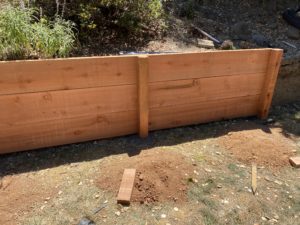 Two redwood retaining wall sections
Each post is then set in properly mixed concrete. We prefer to pre-mix the concrete before placing it in the holes and slightly crown the top of each footing so water drains away from the wood.
As with many landscape structures, attention to detail during installation greatly affects long-term performance.
Drainage Is Critical
Drainage is one of the most important components of any retaining wall.
Without proper drainage, water accumulates behind the wall and increases pressure against the structure. Over time, this additional pressure can shorten the life of the wall and contribute to failure.
For that reason, we typically install a French drain behind the retaining wall before backfilling.
Perforated drainpipe is placed behind the wall and surrounded by clean crushed drain rock. This system collects excess water and directs it away from the structure.
In our experience, proper drainage is one of the keys to a retaining wall that stands the test of time.
A Functional and Attractive Landscape Feature
A redwood retaining wall can do much more than hold back soil.
When thoughtfully designed, it can provide additional seating, define outdoor spaces, create planting terraces, and add architectural interest to the landscape.
At Details Landscape Art, we incorporate proper drainage, quality materials, and careful craftsmanship into every retaining wall project to create structures that are both beautiful and durable throughout Sonoma and Napa Counties.