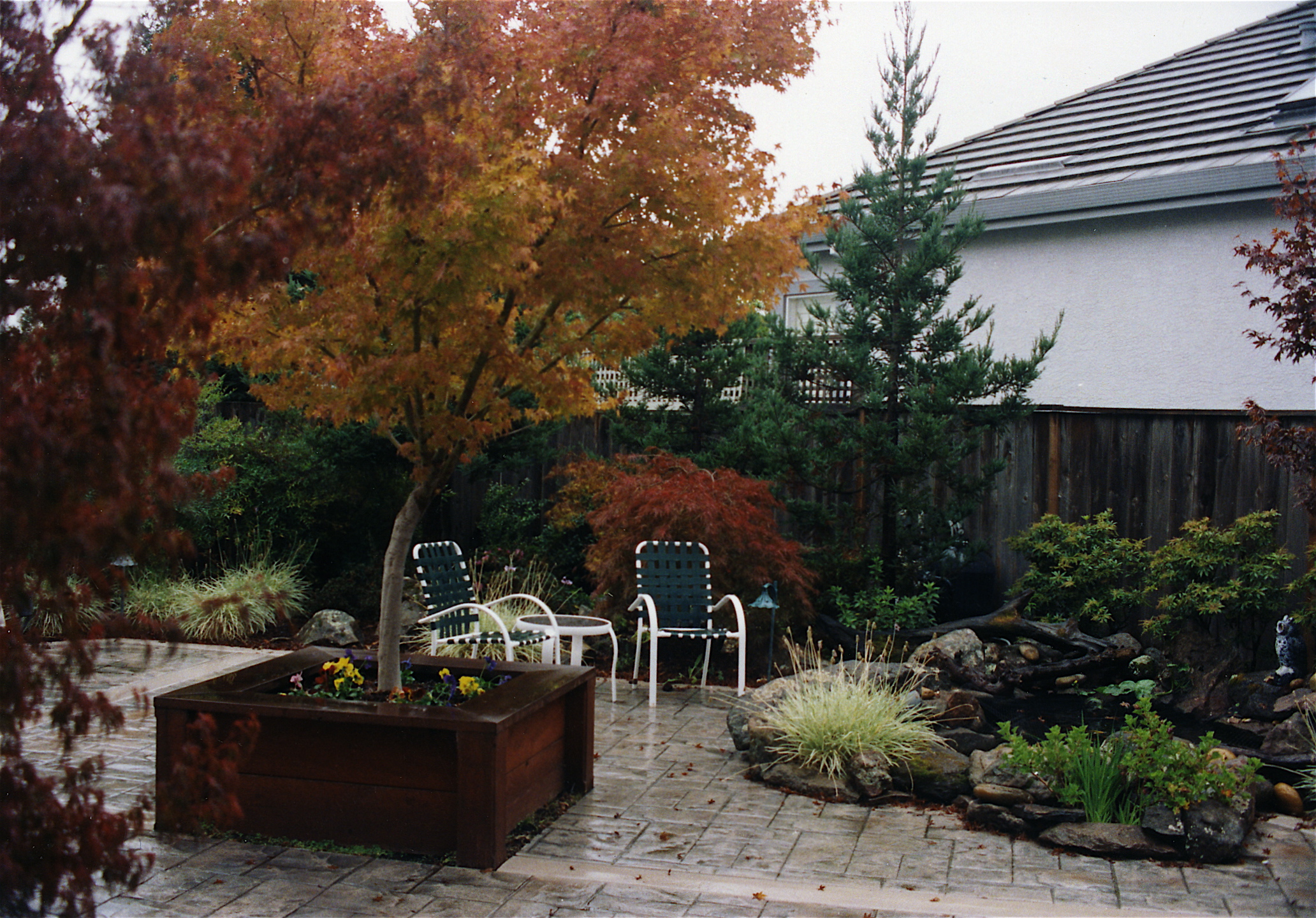
Landscaping in stages is often the best solution for homeowners who have a clear vision for their property but prefer to spread the investment over time. At Details Landscape Art, we design and build landscapes throughout Sonoma County, Marin County, and Napa County, ranging from small garden renovations to large estate properties. An example of landscaping in stages. This is the completed project.
There is no question that landscaping is expensive. The final cost depends on many factors, including the size of the property, the terrain, the materials selected, and the features included in the design. A flat backyard generally costs less to landscape than a steep hillside. A simple patio will cost less than a patio combined with retaining walls, water features, and extensive stonework.
Most homeowners have a budget. The challenge is deciding how to achieve the landscape they truly want without compromising the overall vision.
Why Landscaping in Stages Makes Sense
Many homeowners are tempted to reduce the scope of a project or eliminate important elements simply to meet an immediate budget.
We often recommend another approach.
Rather than settling for a watered-down version of the landscape, it frequently makes more sense to develop a complete plan and then install the project in stages over several months or even several years.
This allows the homeowner to achieve the desired result while spreading the investment over time.
Start with a Complete Plan
One of the biggest mistakes homeowners make is tackling a project one piece at a time without an overall plan.
The result can be a collection of unrelated improvements that never quite fit together.
We prefer to begin with a complete landscape design.
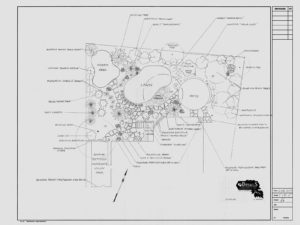
Once the master plan is established, we can identify which portions of the project can be completed independently and in what sequence they should be installed.
A good plan prevents expensive rework later.
Landscaping In Stages – The Bones of the Garden Come First
In most projects, the first stage should be the hardscape.
We often refer to patios, walkways, retaining walls, grading, and water features as the Bones of the Garden. These elements establish the framework of the landscape and should generally be installed before planting begins.
Hardscape construction is always messy. Excavation equipment, concrete trucks, wheelbarrows, and material deliveries can damage newly installed plants and lawns.
For that reason, it usually makes sense to complete the hardscape before moving on to the softscape.
Softscape Is Usually the Next Stage
Once the major construction is complete, attention turns to the living elements of the garden.
Trees, shrubs, ground covers, lawns, and irrigation systems are often installed together.
After the soil has been prepared and amended, plants should be installed promptly. Once planted, they require irrigation and mulch to protect the soil and help suppress weeds.
Trying to spread the softscape over too many stages can sometimes create additional maintenance challenges.
Access Can Affect the Schedule
Access is another important consideration when landscaping in stages.
If heavy equipment will be needed for a future swimming pool, retaining wall, or major grading project, it often makes sense to complete those improvements first.
No one enjoys removing a fence, tearing up a side yard, or driving equipment across a newly completed landscape.
Thinking ahead can save both time and money.
Staging by Area
Another common approach is to divide the project into separate areas.
For example:
- Backyard first
- Front yard later
Or:
- Outdoor living areas first
- Planting areas later
This strategy allows homeowners to enjoy completed portions of the landscape while planning future improvements.
Landscaping in Stages Creates Better Results
Trying to stretch a limited budget across an entire property often results in a landscape that feels unfinished.
In our experience, homeowners are usually happier when they complete one area properly and then move on to the next phase.