Clay soils are common throughout many areas of Sonoma County, particularly in Petaluma and parts of Santa Rosa. While these heavy soils can present challenges during planting and irrigation, they also offer important benefits. With proper preparation and planting techniques, clay soils can support healthy, thriving landscapes for many years.
At Details Landscape Art, we frequently work with adobe clay when designing and installing landscapes throughout Sonoma County. Understanding how these soils behave is critical to long-term garden success.
Understanding Clay Soils
Many homeowners become frustrated when working with heavy clay because they are dense, compact easily, and drain more slowly than sandy or loamy soils.
However, heavy soils also contain valuable nutrients that many plants benefit from once they become established.
The challenge is helping new plants develop healthy root systems during the first several months after planting.
Why Clay Soils Can Benefit Plants
While adobe soils often receive criticism, they do provide several advantages.
Benefits include:
- Excellent nutrient retention
- Increased moisture-holding capacity
- Long-term soil fertility
- Improved drought resistance once plants are established
Many trees, shrubs, and perennials perform very well in clay soils after their roots have adapted to local conditions.
Improving Clay Soils Before Planting
Proper soil preparation is one of the most important steps when planting in clay soils.
We often recommend incorporating organic amendments such as:
- Compost
- Topsoil
- Soil conditioners
- Organic matter
Amending the soil helps improve aeration and creates a more favorable environment for new root growth.
The goal is not to completely replace the native soil but to improve conditions during the establishment period.
Planting High Improves Drainage
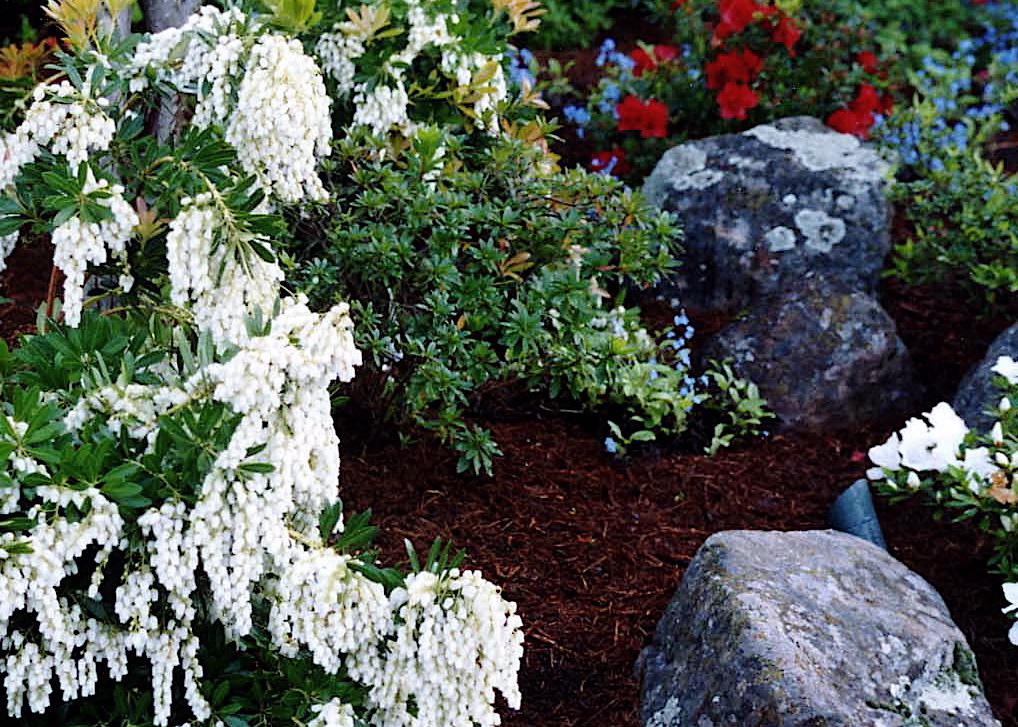
One of the most effective techniques for planting in clay soils is planting slightly above grade. Acid loving plants are planted high in clay soils
We typically dig a hole wider than the root ball but avoid planting too deeply. The crown of the plant is raised slightly so excess moisture can drain away from the root zone.
This simple technique helps prevent one of the most common causes of plant failure:
root rot caused by excessive moisture.
More plants are lost to overwatering than underwatering. Plants suffering from drought stress often recover quickly after watering. Plants with damaged root systems may not.
Irrigation for Clay Soils
Irrigation requires special attention in heavy clay.
Because clay retains moisture longer than other soil types, watering schedules should allow adequate drying time between irrigation cycles.
Drip irrigation is often the ideal solution because it:
- Delivers water directly to the root zone
- Reduces runoff
- Conserves water
- Allows precise control of irrigation amounts
Proper irrigation management encourages deeper root growth and healthier plants.
Drainage Solutions for Problem Areas
In some situations, improving the planting technique alone may not be enough.
Low spots or poorly draining areas may require additional drainage improvements.
Common drainage solutions include:
Surface Drainage
Swales and grading adjustments can redirect water away from planting areas.
Catch Basins and Drain Pipes
Catch basins collect water at low points and move it away through underground drain pipes.
French Drains
French drains use perforated pipe surrounded by gravel to collect and transport excess water away from saturated soil.
Proper drainage often determines whether a landscape succeeds or struggles over time.
Successful Gardening in Clay Soils
Heavy soils do not have to limit the beauty of a landscape. With proper soil preparation, careful irrigation management, and effective drainage solutions, homeowners can create healthy and attractive gardens throughout Sonoma County.
At Details Landscape Art, we regularly design landscapes that thrive in Petaluma’s adobe soils and other challenging site conditions throughout the North Bay.
Whether you are installing a new garden, replacing plants, or solving drainage problems, understanding clay soils is an important step toward long-term landscape success.