
Sustainable landscaping means creating a garden that works with the local climate instead of constantly fighting it. In Sonoma County, that generally means choosing appropriate plants, using water efficiently, improving the soil, controlling erosion, reducing unnecessary lawn areas, using energy-efficient lighting, and designing a landscape that will continue to perform well for many years.
At Details Landscape Art, we believe sustainability should be practical. A sustainable garden does not have to look wild, sparse or unfinished. It can still include colorful perennials, flowering shrubs, Japanese maples, patios, walkways, outdoor living areas and other traditional landscape features.
Sustainable Landscaping Starts With Good Plant Selection
One of the most important parts of sustainable landscaping is simply putting the right plant in the right location.
Plants should be selected according to sun exposure, soil conditions, mature size and water needs. A plant struggling in the wrong location often requires more water, more pruning and more maintenance just to survive.
In Sonoma County, we can choose from a tremendous variety of California natives, Mediterranean plants, ornamental grasses, shrubs, trees and perennials that perform well in our climate.
Native plants can be an excellent choice, but a sustainable garden does not have to consist entirely of native plants. Many plants from other Mediterranean climates are also well suited to our dry summers and relatively mild winters.
Water Conservation Without Sacrificing the Garden
Water conservation is obviously an important part of sustainable landscaping in Northern California.
Drip irrigation allows water to be delivered directly into planting areas rather than being sprayed across sidewalks, patios and other areas where it is not needed.
Proper irrigation design is just as important as the equipment itself. Planting areas should receive the amount of water actually required by the plants growing there, rather than simply watering everything the same way.
Mulching planting beds also helps reduce evaporation while moderating soil temperatures and suppressing weeds.
The objective is not to eliminate irrigation. It is to use water intelligently.
Reduce Lawn Where It Doesn’t Serve a Purpose
Lawns can certainly have a place in a residential landscape. They provide areas for children to play, dogs to run and families to enjoy the garden.
But lawn does not have to cover every unused portion of a property.
Reducing unnecessary lawn areas can significantly reduce water consumption while creating opportunities for more interesting planting.
Shrubs, ornamental grasses, perennials, groundcovers, trees and garden pathways can often produce a much more attractive landscape while requiring less water than a large expanse of turf.
Healthy Soil Creates Healthier Plants
Beautiful gardens begin below the surface.
Many Sonoma County properties have difficult soils, ranging from heavy clay to compacted construction soil. Proper soil preparation before planting can make an enormous difference in how well a landscape performs.
Where appropriate, we amend the soil to improve its structure and create better growing conditions for new plants.
Healthy, properly prepared soil allows roots to establish more successfully and helps plants make better use of the water they receive.
Sustainable Landscaping Includes Drainage and Erosion Control
Water conservation receives much of the attention when people discuss sustainable landscaping, but handling excess water properly is equally important.
Poor drainage can damage plants, saturate soil, undermine patios and create erosion problems.
Proper grading, drainage systems, dry creek beds and thoughtful planting can help direct and control stormwater.
On hillside properties, erosion control becomes even more important. Plant roots can help stabilize slopes, while terracing and retaining walls may be necessary where grades are particularly difficult.
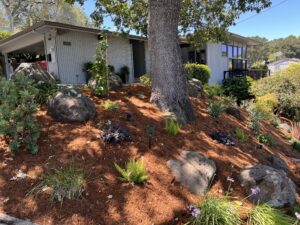
Sustainable landscaping on a hillside
A sustainable landscape should be able to handle both our long dry summers and the heavy winter storms that occasionally arrive in Sonoma County.
Trees Provide Long-Term Benefits
Trees are among the most valuable elements in a residential landscape.
Properly located deciduous trees can provide summer shade for patios and portions of the home while allowing more sunlight through during the winter after their leaves have fallen.

Beautiful Scarlet Maple
Trees also provide structure, scale and maturity to a landscape while creating habitat for birds and other wildlife.
As with every other plant, however, the key is selecting a tree whose ultimate size and growing requirements are appropriate for the location.
Energy-Efficient Landscape Lighting
Sustainable landscaping also includes thinking about how the garden is used after dark.
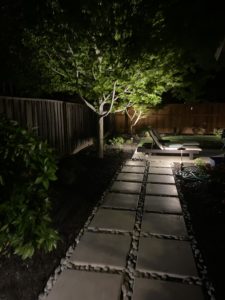
Low voltage lighting adds evening drama to a walkway
Modern low-voltage LED landscape lighting uses far less electricity than older incandescent systems while providing attractive and dependable illumination for patios, walkways, steps, trees and other garden features.
A well-designed lighting system should not simply flood the entire property with light. Fixtures can be placed selectively to improve safety, highlight important landscape features and extend the use of outdoor living areas into the evening.
LED lamps also last much longer than older landscape-lighting technology, reducing both energy use and the frequency of lamp replacement.
Gardens Can Support Birds and Pollinators
A well-planted garden can also become habitat.
Flowering perennials and shrubs can attract hummingbirds, butterflies and other pollinators, while trees and larger shrubs provide shelter and nesting areas for birds.
This does not require turning the property into a completely naturalized landscape.
Even a carefully designed ornamental garden can provide food, flowers, shelter and seasonal interest while still looking organized and attractive.
Sustainable Landscaping Should Still Be Beautiful
Perhaps the biggest misconception about sustainable landscaping is that environmental responsibility requires homeowners to give up the kind of garden they really want.
We don’t believe that is necessary.
A sustainable landscape can still contain patios, entertaining areas, colorful plants, specimen trees, Japanese maples, landscape lighting and carefully designed garden spaces.
The objective is simply to make intelligent choices about how those elements are designed and built.
For Details Landscape Art, sustainable landscaping means creating attractive Sonoma County gardens that use water wisely, respond to local conditions, use energy efficiently and are designed to remain healthy and functional for many years.