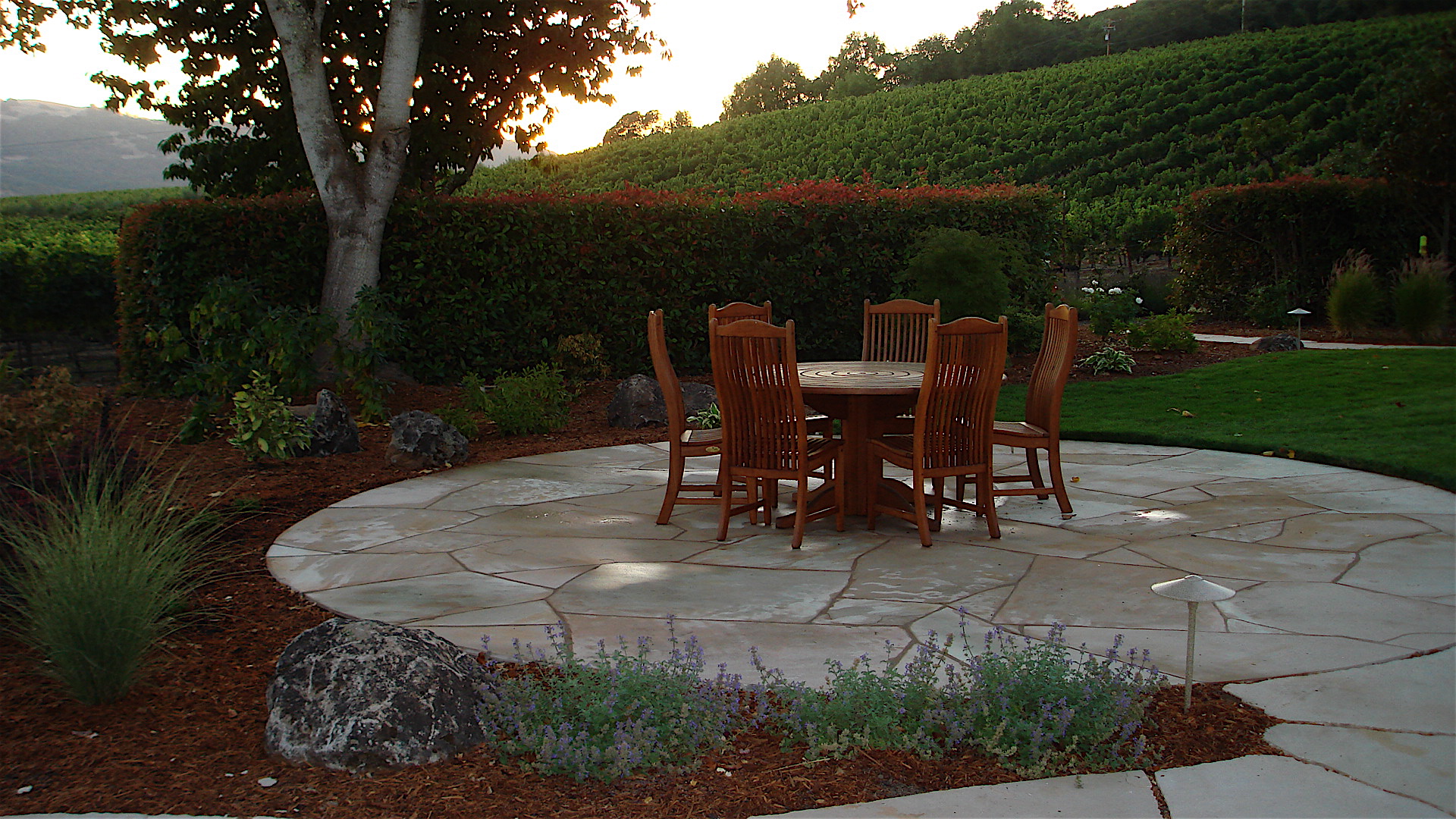
One of the most common requests we receive from homeowners is for privacy. As lots become smaller throughout Sonoma, Marin, and Napa Counties, houses are often built only a few feet apart. Second-story windows overlook neighboring yards, and outdoor living spaces can sometimes feel more public than private. Fortunately, screening shrubs offer an attractive solution. Photinia is the screening shrubs that provides privacy from the vineyard
At Details Landscape Art, privacy screening is a common element in many of our landscape designs. While trees can certainly provide screening, they are often too large for today’s smaller residential properties. Trees may spread beyond property lines, cast excessive shade, or simply occupy more space than the homeowner would like. Tall, narrow evergreen shrubs often provide a better alternative, creating privacy while preserving valuable garden space.
Why Homeowners Choose Screening Shrubs
Unlike fences, plants soften the landscape and add beauty, texture, and seasonal interest. Evergreen screening plants provide privacy throughout the year while serving as an attractive backdrop for the rest of the garden.
In larger landscapes, we often alternate groups of different screening plants along a fence line rather than planting a single species from one end to the other. This approach creates a more natural and visually interesting background while still providing excellent screening.
Choosing the Right Screening Shrubs
Not every tall shrub makes a good screen.
The ideal screening plant should:
- Remain evergreen
- Grow upright rather than excessively wide
- Tolerate local climate conditions
- Require minimal maintenance
- Respond well to occasional pruning
Over the years, we have developed a list of reliable performers that consistently work well throughout the North Bay.
Our Favorite Evergreen Screening Shrubs
Pittosporum
Pittosporum is probably our most frequently used screening plant and our go-to choice for many privacy situations.
Several varieties are available, each offering different sizes, foliage colors, and textures.
Favorites include:
- Pittosporum tenuifolium – dark green foliage with attractive black stems
- Pittosporum eugenoides – lighter, crinkled foliage with a softer appearance
- Pittosporum ‘Marjorie Channon’ – dense growth with attractive variegated foliage
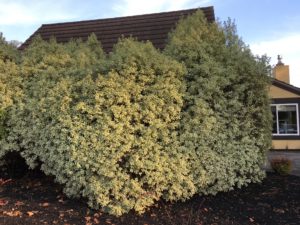 Pittosporum ‘Marjorie Channin – excellent evergreen screening shrub
Most varieties maintain a naturally upright form and require little pruning to remain attractive.
Podocarpus gracilior
This beautiful dark green evergreen provides a lush, elegant appearance and works especially well in shaded locations.
With occasional pruning, Podocarpus can be maintained as a tall, narrow screen while creating an excellent backdrop for smaller shrubs and flowering plants.
Leptospermum
Often called Tea Tree, Leptospermum performs best in full sun and offers the added bonus of colorful flowers.
One of our favorites is Leptospermum ‘Ruby Glow’, which produces deep red blooms in spring and creates an outstanding privacy screen.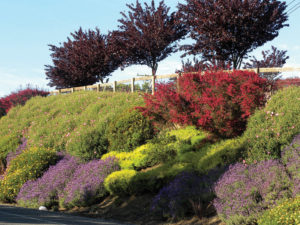 ‘Ruby Glow’ is the screening shrub high on the hilll
Pineapple Guava
Feijoa sellowiana, commonly known as Pineapple Guava, is one of the most versatile plants we use.
Its gray-green foliage provides a distinctive color contrast in the landscape, while its edible flowers and fruit are an added bonus. It makes an excellent screen and responds well to pruning when necessary.
Hopseed Bush
Dodonaea viscosa is valued for its rich burgundy foliage, particularly in sunny locations.
It grows quickly and provides excellent screening, although prolonged hard freezes can occasionally damage new growth.
Photinia
Photinia remains popular because of its bright red new growth.
It responds well to pruning and can be maintained as a dense privacy hedge. Regular trimming also encourages fresh red foliage while reducing flowering.
Carolina Laurel Cherry
This evergreen shrub can be grown as either a large shrub or a small tree.
Capable of reaching twenty feet or more, it provides excellent screening and responds well to pruning when a narrower profile is desired.
Creating a Better Background Using Screening Shrubs
One mistake we occasionally see is the use of a single screening plant repeated endlessly along a fence line. While this certainly provides privacy, it can become monotonous.
In larger gardens, we often combine several varieties with different foliage colors and textures. Dark green Podocarpus may be paired with gray-green Pineapple Guava or variegated Pittosporum. These combinations provide privacy while creating a much more interesting landscape.
Privacy With Beauty
The best screening plants do more than block a view. They create structure, provide year-round greenery, frame outdoor spaces, and serve as an attractive backdrop for the rest of the garden.
At Details Landscape Art, thoughtful plant selection allows us to create privacy without sacrificing beauty. With the right screening shrubs, even a small residential lot can feel secluded, comfortable, and inviting.